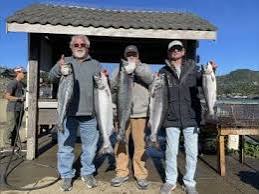
The coastline surrounding Crescent City, Smith River, and Brookings offers an unusually broad variety of fishing experiences.
Visitors may choose between ocean charter fishing, salmon fishing, steelhead fishing, rockfish and lingcod fishing, Pacific halibut fishing, albacore tuna trips, surfperch fishing, jetty fishing, harbor fishing, river fishing, guided fishing excursions, family-friendly shore fishing, and catch-and-release fishing.
The region’s fishing opportunities are influenced by season, ocean conditions, river flow, rainfall, fish migrations, water temperature, regulations, conservation needs, boat availability, and weather.
Some fisheries may remain available for long periods. Others can open, close, or change quickly according to fish abundance, harvest limits, water conditions, and emergency regulations. California and Oregon also maintain separate licensing systems and regulations.
A guest staying at White Rock Resort may fish in California one day and Oregon the next, but a license or endorsement valid in one state generally does not authorize fishing in the other.
This guide provides a practical overview of the fishing experiences available near Crescent City, the Smith River, Brookings, and the Redwood Coast. Because fishing regulations change frequently, anglers must verify all current rules before fishing.
Why the Redwood Coast Is an Excellent Fishing Destination
The region contains several productive fishing environments within a relatively short drive.
These include:
- Pacific Ocean.
- Crescent City Harbor.
- Brookings Harbor.
- Smith River.
- Chetco River.
- Beaches.
- Rocky shorelines.
- Jetties.
- Estuaries.
- Bays.
- River mouths.
- Offshore reefs.
- Deep-water fishing grounds.
Different environments support different species and fishing methods. A visitor may spend one morning fishing for surfperch from a beach and the next day travel offshore for rockfish, lingcod, salmon, or halibut.
Is Fishing Available Year-Round?
Some form of fishing may be available during much of the year, but no individual species should be assumed to remain open year-round.
Fishing opportunities can change because of:
- Seasonal closures.
- Emergency regulations.
- In-season catch limits.
- Salmon run strength.
- Low river flow.
- Marine conservation measures.
- Weather.
- Ocean safety.
- Public-health advisories.
- Species-specific quotas.
Oregon advises anglers to check in-season updates before fishing, particularly for salmon, steelhead, and marine fish, because seasons may change quickly.
California also advises anglers to use current electronic regulations because rule booklets may be revised during the year.
The Main Fishing Experiences
The strongest fishing categories near White Rock Resort include:
1. Crescent City Ocean Fishing
Access Northern California ocean waters for currently legal marine species and charter opportunities.
2. Brookings Ocean Fishing
Explore Southern Oregon marine fisheries from Brookings Harbor when seasons and conditions permit.
3. Smith River Fishing
Experience salmon and steelhead fishing on one of Northern California’s best-known wild rivers.
4. Chetco River Fishing
Explore Oregon river fishing opportunities for salmon and steelhead.
5. Surfperch Fishing
Fish from sandy beaches without requiring a boat.
6. Jetty Fishing
Reach deeper rocky habitat from coastal jetties when conditions are safe.
7. Harbor Fishing
Enjoy shorter fishing sessions near Crescent City and Brookings harbors where access is legal.
8. Guided Fishing
Work with local guides who can provide equipment, instruction, navigation, and local knowledge.
9. Family Fishing
Choose shorter harbor, shore, or guided outings that match the ages and abilities of the group.
10. Catch-and-Release Fishing
Practice careful fish handling when release is required or chosen voluntarily.
Crescent City Ocean Fishing
Crescent City Harbor provides access to productive Northern California ocean waters.
Depending on current seasons and regulations, anglers may pursue:
- Rockfish.
- Lingcod.
- Pacific halibut.
- Salmon.
- Albacore tuna.
- Other legal marine species.
California maintains location-specific recreational ocean regulations for the Northern Region, including waters from the Oregon border southward. These rules include seasons, size restrictions, depth limitations, bag limits, gear requirements, and marine protected areas.
A licensed charter can simplify the experience for visitors who do not own a boat or ocean-fishing equipment.
What Is a Crescent City Charter Trip Like?
A charter trip may include:
- Early-morning departure.
- Safety orientation.
- Travel through the harbor entrance.
- Ocean transit.
- Fishing over reefs or deeper water.
- Crew assistance.
- Equipment.
- Bait or tackle.
- Fish handling.
- Return to the harbor.
Services vary by operator. Before booking, ask whether the price includes:
- Rods.
- Reels.
- Tackle.
- Bait.
- Fish cleaning.
- License assistance.
- Tips.
- Food.
- Drinks.
- Rain gear.
- Motion-sickness supplies.
Never assume every service is included.
Common Crescent City Ocean Species
Rockfish
Several species of rockfish inhabit Northern California waters. They may be found around rocky reefs, underwater structures, kelp, and deeper bottom habitat.
Regulations vary by species, season, location, and depth. Accurate identification is essential because some species may have different limits or protections.
Lingcod
Lingcod are large predatory bottomfish associated with rocky habitat. They are prized for strong fights, large size, and firm white meat. Minimum size, bag limits, seasons, and depth restrictions may apply.
Pacific Halibut
Pacific halibut opportunities are managed through annual regulations and harvest allocations. The season may close when limits are reached.
Salmon
Ocean salmon seasons are established annually and may vary substantially from year to year. Seasons, dates, minimum sizes, and area rules require current verification.
Albacore Tuna
Albacore may become available offshore when warm ocean water moves closer to the coast. Trips may require long travel distances, excellent ocean conditions, specialized boats, full-day commitments, and greater fuel costs.
Tuna should be considered a seasonal offshore opportunity rather than a guaranteed local fishery.
Brookings Ocean Fishing
Brookings Harbor provides access to Southern Oregon ocean fisheries. Depending on season and current rules, anglers may pursue:
- Rockfish.
- Lingcod.
- Salmon.
- Pacific halibut.
- Albacore tuna.
- Other marine fish.
Oregon describes its Marine Zone as offering fishing from beaches, bays, jetties, and boats, including surfperch, rockfish, lingcod, halibut, salmon, and tuna opportunities.
Brookings may be especially convenient for White Rock Resort guests interested in combining fishing, harbor sightseeing, dining, shopping, and Southern Oregon coastal exploration.
Oregon’s Ocean Endorsement
Beginning January 1, 2026, Oregon requires an Ocean Endorsement for most recreational anglers fishing for marine fish in ocean waters from beaches, jetties, boats, or while spearfishing.
The endorsement is generally not required when fishing specifically for salmon, steelhead, or shellfish. Anglers must still hold any other license, tag, or authorization required for the activity.
Because this is a relatively new requirement, visitors should confirm exactly which license and endorsement apply to their planned trip.
Brookings Bottomfish Fishing
Bottomfish trips may target:
- Rockfish.
- Lingcod.
- Greenling.
- Cabezon where permitted.
- Other legal groundfish.
Oregon maintains dedicated bottomfish regulations because species limits differ, some species are closed, minimum sizes may apply, depth restrictions may change, bag limits may change, and an Ocean Endorsement may be required.
Do not rely on an old fishing report, photograph, or social-media post to determine what may currently be kept.
Brookings Ocean Salmon
Oregon ocean salmon seasons are finalized annually and operate under a salmon management year. Seasons are generally finalized in late April for the salmon year beginning May 16.
Current rules may specify:
- Open dates.
- Open days of the week.
- Geographic boundaries.
- Minimum size.
- Species restrictions.
- Fin-clipping requirements.
- Daily limits.
- Quota closures.
A charter captain should explain the current rules, but each angler remains responsible for legal compliance.
Smith River Salmon Fishing
The Smith River is one of Northern California’s most famous wild rivers. It is known for clear water, forested scenery, Chinook salmon, steelhead, powerful flows, and rapidly changing conditions.
Fishing the Smith River is very different from ocean fishing. Success may depend on:
- Rain.
- River height.
- Water clarity.
- Flow.
- Fish migration.
- Access.
- Regulations.
- Angling method.
- Guide experience.
Smith River Chinook Salmon
Fall and early-winter Chinook salmon attract anglers to the Smith River. The exact timing and legal fishing opportunities vary.
Anglers may fish from:
- Drift boats.
- Rafts.
- Bank access.
- Guided boats.
- Legal public areas.
The river may become too low, too high, or too muddy for effective fishing. Fishing pressure may also be significant during productive periods.
Smith River Steelhead
Winter steelhead are another major Smith River attraction. Steelhead fishing may involve cold weather, rain, long days, changing river levels, specialized tackle, careful fish handling, and report-card requirements.
California requires a Steelhead Report Card for anyone fishing for steelhead, including anglers who might otherwise be exempt from purchasing a regular sport-fishing license.
The report-card requirement is separate from the normal license requirement.
Smith River Salmon Report Card
California also requires a North Coast Salmon Report Card for anyone fishing for salmon in the Smith, Klamath, or Trinity river systems. The requirement applies even to some people who are not otherwise required to hold a standard fishing license, including children under sixteen.
Before fishing the Smith River for salmon or steelhead, confirm whether you need a California sport-fishing license, Steelhead Report Card, North Coast Salmon Report Card, additional validation, and current harvest documentation.
Low-Flow Closures
Low-flow regulations are extremely important on North Coast rivers. California may close specified rivers or river sections when flows fall below established thresholds. These measures protect salmon and steelhead during vulnerable conditions.
Never assume that an open-looking river is legally open to fishing. Check current low-flow status before leaving White Rock Resort.
Why Hire a Smith River Guide?
A licensed guide may help visitors understand:
- River conditions.
- Boat access.
- Current fish movement.
- Tackle.
- Legal fishing methods.
- Public access.
- Safe navigation.
- Fish handling.
- Seasonal expectations.
A guide does not guarantee a catch. The value often comes from local knowledge, equipment, safe transportation, river navigation, instruction, and reduced uncertainty.
Chetco River Fishing
The Chetco River near Brookings supports important salmon and steelhead fishing opportunities. Depending on season and current rules, anglers may pursue fall Chinook salmon, winter steelhead, and other legal species.
Like the Smith River, the Chetco can change rapidly. Fishing quality may depend on rain, river level, clarity, temperature, run timing, emergency regulations, and access.
Oregon regulations may differ from those applying only a short distance away in California.
California and Oregon Licenses Are Separate
A California fishing license does not generally authorize fishing in Oregon. An Oregon license does not generally authorize fishing in California.
Visitors fishing both states may need:
- California license.
- California report cards.
- Oregon license.
- Oregon tags.
- Oregon Ocean Endorsement.
- Species-specific authorizations.
Plan the exact fishing location before purchasing licenses.
Surfperch Fishing
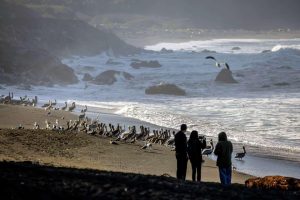
Surfperch fishing provides one of the simplest ways to fish the coast without a boat. Anglers cast from sandy beaches into troughs, channels, edges of breaking waves, and areas near submerged structure.
Surf fishing may appeal to beginners, families with older children, travelers without boats, anglers who want flexibility, and visitors with only a few hours.
Is Surfperch Fishing Available Year-Round?
Surfperch may be present throughout much of the year. ODFW’s current marine report notes that surfperch can be available year-round, with the best and safest fishing generally occurring when swells are small.
Actual success may vary with tide, swell, beach shape, wind, water clarity, season, and fish movement.
Best Tide for Surf Fishing
There is no single tide that works at every beach. Anglers commonly consider rising tide, high-tide period, outgoing tide, beach structure, and safe access.
The most important factor is safety. A productive tide is not worth fishing when waves are dangerous, driftwood is moving, the beach has no escape route, high tide reaches cliffs, or sneaker-wave warnings are active.
Surf-Fishing Equipment
Ask a local tackle shop or licensed guide for current recommendations.
Surf-Fishing Safety
Surf fishing can become dangerous quickly. Remain aware of sneaker waves, rising tide, strong currents, cold water, slippery rocks, moving driftwood, unstable cliffs, fog, and wind.
Never turn your back on the ocean. Do not wade deeply. Cold Pacific water can impair movement within minutes.
Jetty Fishing
Jetties may provide access to deeper water and rocky habitat. Possible species may include rockfish, lingcod, greenling, surfperch, and other legal marine fish.
However, jetty fishing is one of the more dangerous shore-fishing activities.
Hazards include:
- Large waves.
- Slippery boulders.
- Gaps between rocks.
- Sudden swells.
- Strong wind.
- Algae.
- Difficult rescues.
- Changing tides.
Is Jetty Fishing Appropriate for Beginners?
Not during rough conditions. Beginners should consider harbor areas, piers, beaches during small swells, or guided trips.
Jetty fishing should only be attempted when conditions are calm, access is legal, footwear has excellent traction, the angler understands tides, waves are monitored continuously, and someone knows the fishing location.
A personal flotation device may be appropriate even when fishing from shore.
Harbor Fishing
Crescent City and Brookings harbors may offer fishing opportunities from legal public areas.
Possible advantages include:
- Nearby parking.
- Restrooms.
- Food.
- Shelter from some ocean conditions.
- Easier family access.
- Shorter outings.
- Opportunities to observe boats and wildlife.
Possible species depend on season, tide, location, water conditions, and current regulations.
Do not fish from private docks, restricted areas, prohibited locations, active loading areas, or places where lines interfere with vessels.
Fishing Around Boats
Harbor anglers must avoid:
- Casting toward moving vessels.
- Leaving lines across channels.
- Blocking ramps.
- Entering commercial work areas.
- Fishing near fuel docks.
- Interfering with crab gear.
- Cleaning fish on unauthorized surfaces.
Harbors are working environments. Fishing access may be secondary to vessel operations, commercial fishing, emergency access, maintenance, and public safety.
Guided River Fishing
A guided river trip may be one of the best choices for visitors unfamiliar with North Coast rivers.
A typical guided trip may include:
- Boat.
- Safety equipment.
- Rods and reels.
- Tackle.
- Local instruction.
- River navigation.
- Fish netting.
- Help understanding regulations.
Ask whether the guide provides rain gear, lunch, drinks, fish processing, transportation, license assistance, and child-sized safety equipment.
Questions to Ask a Fishing Guide
- Are you licensed and insured?
- Which river or ocean area will we fish?
- What species are currently available?
- What is the expected trip length?
- What is included?
- What should we bring?
- Which license or report card do we need?
- Are children welcome?
- Is safety equipment provided?
- What is the cancellation policy?
- What happens during unsafe weather?
- Is fish cleaning included?
- What is the maximum group size?
- Is the trip catch-and-release or harvest?
- Are gratuities customary?
- Is there a restroom available?
- How physically demanding is the trip?
- Are motion-sickness concerns relevant?
- What time should we arrive?
- Is the boat accessible for limited mobility?
Family Fishing
Fishing can be a memorable family activity when the trip matches the children’s ages and attention span.
Good family options may include:
- Short harbor sessions.
- Calm-water guided trips.
- Easy shore access.
- Surfperch fishing during safe conditions.
- Beginner-friendly charter trips.
- Casting practice.
- Wildlife observation.
Avoid beginning with a very long offshore trip, rough ocean conditions, dangerous jetties, cold winter river days, or long hikes carrying gear.
Fishing With Young Children
- Keep the trip short.
- Use child-sized life jackets near water.
- Choose easy access.
- Bring snacks.
- Provide warm layers.
- Protect against hooks.
- Use barbless hooks where required or appropriate.
- Have an adult handle bait and fish.
- Keep children away from cleaning areas.
- End the trip before exhaustion.
A successful family fishing day does not require catching a fish.
California Fishing Licenses
California generally requires anglers age sixteen or older to hold a valid sport-fishing license unless a specific exemption applies. Short-term nonresident licenses may be available. Additional report cards or validations may be required for particular species or waters.
Visitors should confirm:
- Age requirement.
- Resident or nonresident status.
- License duration.
- Report cards.
- Species.
- Location.
- Fishing method.
Oregon Fishing Licenses
Oregon fishing licenses are generally valid from January 1 through December 31, with daily and multi-day licenses also available.
Depending on the fishing plan, anglers may need:
- Angling license.
- Combined angling tag.
- Columbia River Basin Endorsement in applicable waters.
- Ocean Endorsement.
- Harvest card or tag.
- Youth license.
- Species-specific authorization.
Confirm current requirements directly through ODFW.
Children and Fishing Licenses
License requirements for children differ between California and Oregon. Even when a child does not need a standard fishing license, a report card may still be required for certain California fisheries.
California specifically requires appropriate report cards for anyone fishing for steelhead or salmon in designated North Coast rivers, including children under sixteen. Parents should not assume that “no license required” means “no documentation required.”
Do Charter Customers Need Licenses?
Usually, anglers remain responsible for holding the required license, tag, endorsement, or report card.
Some operators may:
- Explain the requirements.
- Provide purchase instructions.
- Sell certain licenses where authorized.
- Direct customers to a nearby vendor.
Ask before arrival. Do not arrive at the dock assuming the charter fee includes a fishing license.
Why Regulations Change
Fishing regulations may change in response to:
- Fish abundance.
- Conservation goals.
- Catch rates.
- Quotas.
- Endangered species protections.
- Ocean conditions.
- River flow.
- Water temperature.
- Hatchery returns.
- Tribal harvest agreements.
- Federal management decisions.
- Public safety.
Salmon, steelhead, halibut, and marine bottomfish rules require especially careful review.
Checking Regulations on the Day of Fishing
- Identify the exact state.
- Identify the exact water.
- Identify the target species.
- Check the current regulation booklet.
- Check in-season updates.
- Check emergency closures.
- Check low-flow status.
- Check marine protected areas.
- Confirm size and bag limits.
- Confirm legal gear.
- Bring a measuring device.
- Carry licenses and report cards.
Do not depend only on a guide, friend, or tackle-store conversation.
Marine Protected Areas
Northern California contains marine protected areas with special rules. Some areas may prohibit or restrict fishing, harvest, collection, certain gear, or taking particular species.
Anglers should know their exact position, particularly when fishing from a private boat or remote shoreline.
Species Identification
Correct fish identification is essential. Species that look similar may have different bag limits, size limits, seasons, protected status, and gear restrictions.
Carry:
- Current identification guide.
- Measuring device.
- Regulation summary.
- Phone application where available.
When uncertain, release the fish safely if legally permitted and practical.
Measuring Fish
Regulations may specify total length, fork length, alternate measurement, minimum size, maximum size, or slot limit.
Measure the fish immediately using an appropriate device. Do not estimate. Keep a measuring board or tape accessible before fishing begins.
Barbless Hooks and Gear Rules
Some salmon and steelhead waters may require:
- Barbless hooks.
- Single-point hooks.
- Restricted bait.
- Limited hook numbers.
- Specific lure types.
- Special leader requirements.
Ocean and river rules may differ. A legal setup in one location may be illegal only a few miles away.
Catch-and-Release Fishing
Catch-and-release may be required or chosen voluntarily.
Proper handling includes:
- Using appropriate tackle.
- Landing fish quickly.
- Wetting hands.
- Keeping fish in the water.
- Avoiding contact with gills.
- Removing hooks carefully.
- Limiting photographs.
- Reviving fish before release.
- Using barbless hooks when appropriate.
- Cutting the line when hook removal would cause greater injury.
Cold-water fish can be harmed by excessive handling even when they swim away.
Releasing Salmon and Steelhead
When releasing salmon or steelhead, keep the fish in the water, support the body gently, do not hold by the gills, avoid placing the fish on dry rocks, minimize air exposure, do not squeeze, face the fish into gentle current, and allow it to regain balance.
Photography should never take priority over survival.
Retaining and Recording Fish
Some fisheries require anglers to record retained fish immediately on a report card or harvest tag.
Carry:
- Pen or permanent marking tool.
- Report card.
- License.
- Waterproof holder.
Complete records before resuming fishing when regulations require it. Do not wait until returning to the cabin.
Fish Cleaning Etiquette
Fish should be cleaned only where legal and appropriate.
Use:
- Authorized cleaning stations.
- Charter-provided processing areas.
- Legal private facilities.
- Commercial processors.
Do not clean fish on picnic tables, docks without permission, beach access points, parking lots, swimming areas, or inside a White Rock Resort cabin unless resort policy specifically permits it.
Dispose of remains according to local rules.
Transporting Fish
- Maintain required skin patches or identifying features.
- Keep species separated where necessary.
- Preserve tags.
- Follow filleting rules.
- Keep fish cold.
- Use leak-resistant containers.
- Carry licenses and documentation.
- Follow state-border transport requirements.
Rules may restrict how fish can be processed before reaching shore or a final destination.
Bringing Fish Back to White Rock Resort
Before storing or preparing a catch, confirm resort policies, use sealed containers, keep fish chilled, prevent odors, avoid placing loose fish in shared spaces, clean all equipment, dispose of waste legally, do not leave bait outside, and avoid attracting wildlife.
A portable cooler with ice is usually essential.
Motion Sickness
Ocean motion may affect travelers who have never experienced seasickness.
Possible preparation includes:
- Sleeping well.
- Eating a light meal.
- Avoiding heavy alcohol use.
- Remaining hydrated.
- Asking a healthcare professional about medication.
- Taking medication early when directed.
- Staying in fresh air.
- Watching the horizon.
- Avoiding strong odors.
Charter operators cannot eliminate sea conditions. People with medical concerns should consult a qualified healthcare professional.
Ocean-Charter Safety
A legal fishing season does not mean ocean conditions are safe.
Coast Guard and Weather Decisions
Charter captains may cancel or modify trips because of wind, swell, fog, harbor-bar conditions, mechanical problems, or Coast Guard advisories.
Treat cancellations as responsible decisions, not inconveniences. A reputable operator should prioritize safety over fishing.
River Safety
North Coast rivers may contain strong current, deep channels, cold water, slippery rocks, sudden drop-offs, submerged logs, changing flows, and difficult banks.
Wear a personal flotation device when appropriate. Never wade beyond your ability. Avoid crossing unfamiliar water.
Wading Safety
- Use a wading belt.
- Wear suitable boots.
- Use a staff.
- Move slowly.
- Test each step.
- Face upstream when appropriate.
- Avoid deep current.
- Fish with a partner.
- Know the exit route.
- Stop when water rises.
Felt soles may be restricted in some jurisdictions because of invasive-species concerns. Verify current equipment rules.
Cold-Water Risk
The ocean and rivers of the Redwood Coast remain cold. Cold-water immersion can cause gasp reflex, loss of coordination, rapid exhaustion, hypothermia, and drowning.
Do not rely on swimming ability alone. Life jackets, safe footing, and conservative decisions are essential.
Beach and Jetty Safety
Shore anglers should watch for:
- Sneaker waves.
- High surf.
- Rogue waves.
- Rising tides.
- Slippery rock.
- Unstable driftwood.
- Cliff collapse.
- Fog.
- Limited escape routes.
Shore and surf fishing are safest when swells are small. Check tides when fishing from shore, estuaries, or bays.
Fishing During Rain
Light rain may improve some river-fishing conditions. Heavy rain may create:
- Dangerous flows.
- Flooding.
- Muddy water.
- Road closures.
- Falling branches.
- Debris.
- Difficult boat launches.
Check river gauges, weather, road conditions, guide recommendations, and emergency closures. Do not attempt to “beat the storm.”
Fishing During Low Water
Low water may make fish more visible, more concentrated, more vulnerable, easier to disturb, and subject to regulatory protection.
California low-flow closures may prohibit fishing in affected North Coast rivers even when access remains physically possible.
Fishing During Heat
Warm water can place severe stress on salmon and steelhead. Even when fishing remains legal, anglers should consider:
- Fishing early.
- Avoiding warm afternoons.
- Limiting handling.
- Using heavier tackle.
- Ending catch-and-release activity when water temperatures become harmful.
Conservation-minded choices may exceed minimum legal requirements.
Responsible Fishing
Responsible anglers:
Preventing Wildlife Entanglement
Discarded line can injure seabirds, waterfowl, marine mammals, fish, pets, and people.
Carry a container for used line, hooks, leader, bait packaging, and damaged tackle.
Never leave line on a beach, jetty, dock, or riverbank.
Respecting Private Property
River access may border private land. Do not cross fences, block gates, enter fields, park in driveways, use private boat ramps, walk across yards, or ignore posted signs.
A river may be public while access to it remains private. Use only lawful public access or permission-based access.
Fishing With Dogs
Dogs may create problems around hooks, bait, fish, boats, jetties, wildlife, and fast water.
When dogs are permitted:
- Keep them leashed.
- Prevent them from eating bait or fish remains.
- Keep them away from hooks.
- Provide drinking water.
- Avoid hot vehicles.
- Keep away from seals, birds, and elk.
- Do not take them onto unsafe rocks.
Many charter boats do not accept pets. Ask before booking.
Accessibility
Fishing accessibility varies widely. More accessible possibilities may include:
- Developed harbor areas.
- Piers.
- Dockside fishing where legal.
- Charter boats with appropriate boarding.
- Shore areas near parking.
- Guided boat trips.
- Calm river access.
Ask about distance from parking, surface, railings, restrooms, boat boarding, step height, seating, wheelchair accommodation, and assistance.
Never assume a vessel is accessible because it has a large deck.
Fishing for Older Adults
Older anglers may prefer short charter trips, harbor fishing, guided drift-boat trips, developed shore access, calm-water outings, or trips with seating and restrooms.
Discuss balance, motion sickness, cold exposure, medication, boat boarding, walking distance, and bathroom needs.
Comfort can make the difference between an enjoyable and exhausting trip.
What to Pack for Ocean Fishing
Confirm what the charter supplies.
What to Pack for River Fishing
What to Pack for Surf Fishing
Keep gear light enough to move quickly from incoming waves.
Sample Half-Day Family Fishing Trip
Morning
- Check weather, tide, and regulations.
- Visit a legal harbor or shore-fishing area.
- Help children practice casting.
- Fish for a limited period.
Midday
- Stop before children become tired.
- Eat lunch.
- Watch boats and harbor wildlife.
Afternoon
- Return to White Rock Resort.
- Clean equipment.
- Record the day’s observations.
The goal is a positive experience, not maximum fishing time.
Sample Crescent City Charter Day
Before the Trip
- Confirm departure time.
- Purchase the required California license.
- Ask which species are being targeted.
- Prepare warm waterproof clothing.
- Review the cancellation policy.
Early Morning
- Arrive before the captain’s requested time.
- Attend the safety briefing.
- Organize equipment.
Daytime
- Follow crew instructions.
- Measure and identify fish.
- Record fish when required.
Afternoon
- Return to Crescent City Harbor.
- Arrange legal fish cleaning.
- Store the catch on ice.
- Return to White Rock Resort.
Sample Brookings Charter Day
Before Departure
- Confirm Oregon license and endorsement requirements.
- Check whether the trip targets bottomfish, salmon, halibut, or tuna.
- Ask about fish cleaning and ice.
Morning
- Depart from Brookings Harbor.
- Follow all boat-safety directions.
Afternoon
- Return to the harbor.
- Clean or process the fish legally.
- Eat locally or return to White Rock Resort.
Sample Smith River Guided Day
Before the Trip
- Confirm river conditions.
- Purchase the California license.
- Obtain the correct report card.
- Ask about rain gear and food.
- Confirm launch location.
Morning
- Meet the guide.
- Review boat safety.
- Learn current fishing methods.
Daytime
- Fish legal water.
- Handle fish carefully.
- Complete required report-card entries.
Evening
- Return to White Rock Resort.
- Dry clothing and equipment.
- Record the experience.
Sample Surf-Fishing Morning
Before Leaving
- Check tide.
- Check swell.
- Check wind.
- Confirm beach access.
- Verify current license and endorsement requirements.
Morning
- Arrive during safe conditions.
- Identify channels and troughs.
- Fish without turning your back on the ocean.
Late Morning
- Leave before high tide reduces safe beach space.
- Clean all gear.
- Pack out fishing line and trash.
Sample Two-State Fishing Vacation
Day One: California Ocean
- Crescent City charter.
- Rockfish, lingcod, salmon, or another currently legal target.
- California license and required documentation.
Day Two: Smith River
- Guided salmon or steelhead trip when season and conditions permit.
- California report-card requirements.
Day Three: Oregon Coast
- Brookings charter, surf fishing, or harbor fishing.
- Oregon license and Ocean Endorsement where required.
This itinerary requires careful license planning.
Sample Non-Fishing Companion Day
Not every guest needs to fish. While one person joins a charter or guide, companions may enjoy:
- Crescent City Harbor.
- Brookings Harbor.
- Shopping.
- Dining.
- Beaches.
- Scenic drives.
- Redwood trails.
- Whale watching.
- Birdwatching.
- White Rock Resort.
Confirm the angler’s return time before separating. Ocean and river trips may return later than expected.
Questions to Ask Before Fishing
- Which state will I be fishing in?
- What license do I need?
- Do I need a report card?
- Do I need an Ocean Endorsement?
- Is the species currently open?
- What is the daily limit?
- What is the size limit?
- Are barbless hooks required?
- Is bait permitted?
- Is the river under low-flow closure?
- Are marine protected areas nearby?
- Is the charter licensed?
- Is equipment included?
- Is fish cleaning included?
- Are children permitted?
- Is the trip accessible?
- What happens if weather becomes unsafe?
- What should I wear?
- Are restrooms available?
- Can fish be stored at the resort?
Common Fishing Mistakes
Wrong State License
California and Oregon maintain separate systems.
Forgotten Report Card
Smith River salmon and steelhead fishing may require additional documentation.
Missing Ocean Endorsement
Most Oregon marine-fish anglers need it beginning in 2026.
Old Regulations
Seasons and limits change.
Assuming a License Is Included
Ask the charter before arrival.
Low-Flow Closure
Check current California low-flow status.
Unidentified Fish
Know the species before deciding whether it may be kept.
Estimated Measurements
Carry a measuring device.
Turning Your Back on the Ocean
Watch every wave.
Unsafe Jetties
Choose safer access during difficult conditions.
Poor Footwear
Use nonslip shoes.
Insufficient Warm Clothing
Ocean conditions may feel much colder than shore.
Excessive Fish Handling
Keep released fish wet and minimize air exposure.
Leaving Fishing Line
Pack it out.
Unauthorized Fish Cleaning
Use legal facilities.
Expecting a Guaranteed Catch
Fishing remains unpredictable.
Best Fishing Choice for Beginners
For a first fishing experience, consider:
- A licensed Crescent City or Brookings charter.
- A guided river trip.
- A short surfperch outing in safe conditions.
- Legal harbor fishing with local advice.
A guide or charter reduces the need to purchase specialized equipment and helps visitors understand local conditions.
Best Fishing Choice for Families
For families, consider:
- Short harbor sessions.
- Guided trips that accept children.
- Calm-weather ocean charters.
- Surf fishing during small swells.
- Casting practice near developed access.
Avoid forcing children to remain on a long trip after they lose interest.
Best Fishing Choice for Experienced Anglers
Experienced anglers may enjoy:
- Smith River steelhead.
- Fall Chinook.
- Offshore lingcod.
- Rockfish.
- Pacific halibut.
- Albacore tuna.
- Chetco River fishing.
- Remote surf fishing.
Even experienced visitors should seek local information because North Coast conditions are highly variable.
Why White Rock Resort Is a Strong Fishing Base
White Rock Resort provides convenient access to fishing environments in two states. Guests can travel toward:
- Crescent City Harbor.
- Smith River.
- Brookings Harbor.
- Chetco River.
- Northern California beaches.
- Southern Oregon beaches.
- Ocean charter docks.
- River guide meeting areas.
- Harbor and estuary access.
After fishing, guests can return to a comfortable coastal setting to rest, warm up, review photographs, dry rain gear, organize tackle, plan the next outing, prepare a legally harvested catch where resort policies allow, and enjoy the coast with non-fishing family members.
A multi-night stay allows anglers to adjust plans when ocean or river conditions change.
Fishing Near Crescent City, Smith River, and Brookings
Is Crescent City good for fishing?
Yes. Crescent City offers access to ocean bottomfish, salmon when open, halibut, tuna during favorable conditions, harbor fishing, surf fishing, and nearby river opportunities.
Is Brookings good for ocean fishing?
Yes. Brookings Harbor supports charter and private-boat access to salmon, rockfish, lingcod, halibut, tuna, and other marine fisheries when legally open.
What fish are found in the Smith River?
The Smith River is especially known for Chinook salmon and winter steelhead.
Do I need a fishing license in California?
Most anglers age sixteen or older require a California sport-fishing license, with additional report cards required for certain species and waters.
Do I need a report card for Smith River steelhead?
Yes. California requires a Steelhead Report Card for anyone fishing for steelhead.
Do I need a report card for Smith River salmon?
Yes. A North Coast Salmon Report Card is required for anyone fishing for salmon in the Smith River system.
Do children need salmon or steelhead report cards?
California requires appropriate report cards even for some anglers who do not need a standard license, including children under sixteen.
Does an Oregon license work in California?
No. Separate state licenses are generally required.
Does a California license work in Oregon?
No.
What is Oregon’s Ocean Endorsement?
Beginning in 2026, it is an additional authorization required for most anglers fishing for marine fish in Oregon ocean waters, except certain salmon, steelhead, and shellfish activities.
Are ocean salmon seasons the same every year?
No. Seasons are established annually and may change in-season.
Is surfperch fishing available all year?
Surfperch may be available year-round, but fishing success and safety depend on swell, tide, and weather.
Is jetty fishing safe?
It can be dangerous. Avoid jetties during large swells, wind, high tides, or slippery conditions.
Should beginners hire a guide?
A licensed guide or charter is often the easiest and safest introduction to local fishing.
Are fish guaranteed on a charter?
No. Weather, fish movement, and ocean conditions affect success.
Can charter trips be canceled?
Yes. Captains may cancel because of wind, swell, mechanical concerns, harbor conditions, or safety.
Can I keep every fish I catch?
No. Species, size, season, location, and daily limits determine what may legally be retained.
How do I know whether a fish is legal?
Use current regulations, identify the species, and measure the fish correctly.
Can I clean fish at White Rock Resort?
Guests should confirm the resort’s current fish-cleaning and storage policy before bringing back a catch.
What should I do with discarded fishing line?
Pack it out and place it in an appropriate waste or recycling container.
What is the most important fishing rule?
Check the current regulations for the exact water and species on the same day you fish.
Insider Tip
Do not choose a fishing trip based only on the species you hope to catch. Ask which fishery currently offers the best combination of legal opportunity, safe conditions, active fish, comfortable weather, reasonable travel distance, and suitable experience level.
A visitor may arrive hoping for salmon and discover that a rockfish charter, surfperch morning, or guided steelhead trip offers a much better experience that week.
The best local anglers and captains adapt to the conditions rather than forcing a plan that no longer fits the water.
Related Articles
Experience Redwood Coast Fishing From White Rock Resort
Fishing along the Redwood Coast offers far more than the possibility of bringing home a catch. It provides an opportunity to experience cold Pacific mornings, working harbors, wild rivers, coastal fog, redwood canyons, migrating salmon, winter steelhead, offshore reefs, sandy beaches, Southern Oregon headlands, and some of the most beautiful water in the Pacific Northwest.
Crescent City provides access to productive Northern California ocean water. Brookings offers major Southern Oregon charter and shore-fishing opportunities. The Smith River supports legendary salmon and steelhead experiences. The Chetco River adds another important river fishery just across the state line.
From White Rock Resort, guests can plan ocean, river, harbor, and beach-fishing adventures in both California and Oregon, then return to a comfortable coastal cabin after a day on the water.
Explore Cabins & AvailabilityFishing information and regulations can change frequently. Verify current official California and Oregon fishing regulations, licenses, report cards, endorsements, seasons, closures, low-flow restrictions, marine protected areas, weather, tides, and safety conditions before fishing.