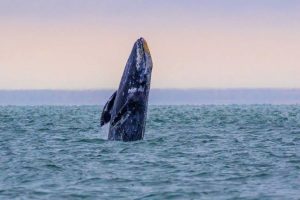
Watching a whale surface in the Pacific Ocean is one of the most memorable experiences along the Redwood Coast. Unlike aquariums or marine parks, whale watching here is completely natural. The animals are free, they appear unexpectedly, and no two sightings are ever the same.
Some visitors may watch a gray whale surface repeatedly for twenty minutes. Others may glimpse only a single blow on the horizon. Both experiences are authentic.
The coastline surrounding Crescent City, Brookings, and the California-Oregon border offers opportunities to observe migrating whales from land without needing a boat. This guide explains which whales visit the area, when migration occurs, where to watch from shore, when boat tours may be worthwhile, how children can enjoy whale watching, photography tips, safety considerations, and responsible wildlife-viewing practices.
Why the Redwood Coast Is Excellent for Whale Watching
The Northern California and Southern Oregon coastline combines several characteristics that make whale watching rewarding.
Elevated Viewpoints
Higher coastal viewpoints allow visitors to scan a broader section of ocean than they could from a flat beach.
Open Pacific Views
Long stretches of open ocean make it possible to watch for blows, backs, tails, and repeated surfacing.
Seasonal Migration
The coastline sits along a major Pacific migration route used by gray whales.
Other Wildlife
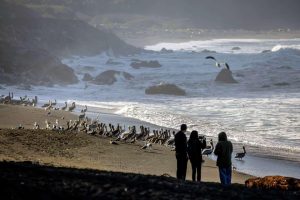
Even when whales remain hidden, visitors may see seals, sea lions, pelicans, cormorants, eagles, dolphins, and shorebirds.
Because many viewpoints sit above the ocean, visitors can often scan a much larger area than they could while standing directly on a beach. Elevation makes spotting whale blows much easier.
Which Whales Can Be Seen?
Although several whale species may occasionally appear offshore, travelers most commonly hope to see:
Gray whales are the species most visitors associate with seasonal migration. Other species are less predictable. No responsible guide can promise a specific whale sighting.
Understanding Gray Whale Migration
Gray whales complete one of the longest migrations of any mammal. Each year they travel between Arctic feeding grounds and breeding and calving lagoons in Baja California, Mexico.
Their journey follows much of the Pacific Coast. Because Crescent City and Brookings lie along this migration route, whales may be visible from shore during migration seasons.
Some gray whales also remain along the Pacific Northwest coast during summer to feed.
Whale watching is never guaranteed.
The best approach is to plan for the experience of observing the ocean rather than promising yourself or your family that a whale will appear.
When Is the Best Time to Watch Whales?
Although whales may occasionally be seen at other times, the general seasonal pattern includes different opportunities throughout the year.
Winter
Southbound migration. Many whales travel toward Mexico during this period.
Spring
Northbound migration. Mothers with calves may travel later and can sometimes remain closer to shore.
Summer
Some gray whales remain to feed, while humpback whales may also be present offshore.
Fall
Whale sightings remain possible but are generally less predictable. Weather and visibility influence viewing conditions.
Can You See Whales From Shore?
Yes. Many visitors successfully watch whales without boarding a boat.
The key is choosing an elevated viewpoint and remaining patient.
Best Shore-Based Viewing Locations
Excellent viewing locations may include:
Coastal Overlooks
Elevated viewpoints provide a wide field of view across the Pacific and can make whale blows easier to spot.
Headlands
Rocky headlands can provide broad ocean views when public access is open and conditions are safe.
Public Viewpoints
Scenic pullouts and designated viewing areas can provide convenient opportunities without requiring a long hike.
Harbor Entrances
Harbor areas can provide opportunities to combine whale watching with seals, sea lions, pelicans, and other marine wildlife.
What Should You Look For?
Many first-time visitors expect dramatic breaching. Most whale sightings are much more subtle.
Whales spend most of their time beneath the surface. Patience is essential.
Understanding Whale Blows
A whale's blow is often the first sign visitors notice. The mist appears because warm air from the whale's lungs condenses in cooler coastal air.
A blow may be visible from surprisingly long distances. After spotting one:
Why Binoculars Matter
Binoculars dramatically improve whale watching.
Without them, many whales appear as tiny dark shapes. With binoculars, visitors may distinguish:
Even inexpensive binoculars can make the experience more rewarding.
Should You Bring a Spotting Scope?
Birdwatchers often carry spotting scopes. For whale watching they can provide exceptional magnification and better identification from a fixed position.
However, spotting scopes are heavier, require a tripod, and have a narrower field of view. Families usually find binoculars more practical.
What Is the Best Time of Day?
Whales can appear at any hour. However, many experienced observers prefer morning because:
Afternoon can also provide excellent sightings. Weather matters more than the clock.
How Weather Affects Whale Watching
Ideal whale-watching weather often includes:
Heavy rain does not prevent whales from surfacing, but it may reduce visibility for people. Fog can hide whales completely.
How Long Should You Watch?
Many visitors make the mistake of stopping after only two minutes.
Give the ocean time.
Remain at one viewpoint for at least 20–30 minutes. Whales often surface repeatedly in one general area, and moving constantly between viewpoints can reduce your chances of noticing activity.
If visibility is excellent but no whales appear after a reasonable period, another nearby viewpoint may offer a different angle. Avoid constantly chasing rumors of sightings. Sometimes remaining patient produces the best results.
Watching Whales With Children
Children enjoy whale watching when expectations are realistic.
Instead of saying, “We're going to see whales,” try saying, “We're going to look for whales.”
Short observation periods often work better for young children.
Wildlife You May See While Looking for Whales
Even without whales, visitors may observe:
Marine Mammals
Sea lions, seals, harbor seals, dolphins, and harbor porpoises may appear around coastal waters.
Seabirds
Pelicans, cormorants, gulls, and other shorebirds may be active around the ocean and harbors.
Birds of Prey
Bald eagles and osprey may be spotted while scanning the coastline and nearby waterways.
Coastal Wildlife
A whale-watching outing can become a broader wildlife experience even when whales remain underwater.
A whale-watching trip is rarely wasted.
Is a Whale-Watching Boat Tour Worth It?
Boat excursions place visitors closer to marine wildlife and may offer different viewing opportunities.
Potential Advantages
Lower viewing angle, greater range, professional naturalists, photography opportunities, and the possibility of observing feeding behavior.
Possible Disadvantages
Cost, seasickness, weather cancellations, reservations, and limited schedules may make boat trips less convenient.
For many families, shore viewing remains the easier choice.
Do You Need a Boat?
No. Many memorable whale sightings occur from land.
Boat tours simply provide different opportunities. If your vacation already includes beaches, redwoods, and scenic drives, shore-based whale watching may fit more naturally into the itinerary.
Whale Photography Tips
Helpful equipment includes:
Use continuous shooting mode. Photograph wider scenes as well as close views. Sometimes the surrounding coastline creates the most memorable image.
Smartphone Whale Photography
Modern smartphones can record whale sightings, but digital zoom has limitations.
Instead of trying to fill the entire frame with a distant whale, capture:
A documentary photograph can become more meaningful than an overly zoomed image.
Responsible Whale Watching
Never:
Planning for Accessibility
Many coastal overlooks provide relatively easy access. Before visiting, confirm:
An accessible overlook with binoculars may produce a better experience than a difficult hike.
Half-Day Whale Watching Itinerary
Start at the Cabin
Have breakfast at White Rock Resort, check weather and visibility, then visit an elevated coastal viewpoint and watch for approximately 30 minutes.
Visit the Harbor
Continue to Crescent City Harbor and look for sea lions, seals, birds, and other marine wildlife.
Enjoy Crescent City
Take a relaxed lunch break in town before deciding whether to continue exploring or return to the cabin.
Keep the Schedule Flexible
Return to the cabin or continue with a scenic drive depending on weather, energy, and wildlife conditions.
Full-Day Wildlife & Whale Itinerary
Whale Watching
Choose one scenic coastal viewpoint and spend time patiently scanning the Pacific.
Harbor Visit
Look for seals, sea lions, pelicans, cormorants, and other marine wildlife.
Redwood Walk
Explore a suitable redwood area while allowing enough time for the group to enjoy the forest rather than rushing through it.
Return to White Rock Resort
Finish the day with sunset or a quiet evening at the cabin.
This combines several experiences without requiring excessive driving.
Common Whale-Watching Mistakes
Questions to Ask Before Going
The Best Overall Whale-Watching Strategy
For most visitors, choose one scenic overlook, bring binoculars, and remain for at least thirty minutes.
Enjoy whatever marine wildlife appears. If whales surface, consider it a wonderful bonus. If they do not, you have still spent time overlooking one of the most spectacular coastlines in North America.
Watch the ocean, not the clock.
Patience is one of the most important pieces of whale-watching equipment you can bring.
Why White Rock Resort Is an Excellent Base for Whale Watching
White Rock Resort places guests within convenient driving distance of numerous whale-viewing opportunities while also providing access to:
Beaches
Explore the Pacific coastline when conditions are safe and appropriate.
Redwoods
Combine marine wildlife viewing with the distinctive forests of the Redwood Coast.
Crescent City
Enjoy restaurants, harbor activity, shops, and other town amenities.
Brookings
Travel north for additional coastal scenery, harbor activity, and Southern Oregon Coast experiences.
Harbors
Look for seals, sea lions, pelicans, cormorants, and other coastal wildlife.
Scenic Drives
Build whale watching into a broader coastal exploration day when road and weather conditions allow.
Guests can spend the morning watching the Pacific, enjoy lunch in town, explore the redwoods during the afternoon, and return to a comfortable coastal cabin for sunset.
Frequently Asked Questions
Can you see whales from Crescent City?
Yes. Seasonal whale sightings are possible from several public coastal viewpoints.
Do you need a boat to see whales?
No. Many excellent sightings occur from shore. A boat simply provides a different viewing opportunity.
What whales are most common?
Gray whales are the species most visitors hope to observe during migration.
What should I bring whale watching?
Bring binoculars, warm clothing, a camera if desired, water, and patience.
How long should I watch?
Plan to remain at one viewpoint for at least twenty to thirty minutes when conditions are comfortable.
Are whales guaranteed?
No. Wildlife sightings are always unpredictable.
Is whale watching suitable for children?
Yes, when expectations are realistic and observation periods remain comfortable.
Can you see whales year-round?
Occasional sightings occur throughout the year, although migration seasons generally provide greater opportunities.
Let Your Eyes Adjust to the Ocean
Instead of immediately raising your binoculars, spend several minutes watching the ocean with your eyes first.
Large whale blows can appear surprisingly easy to notice once you relax and scan slowly. Many experienced whale watchers spend more time observing than searching.
Patience almost always produces a better experience than constantly moving from one viewpoint to another.
Related Articles
Experience Whale Watching From White Rock Resort
One of the greatest pleasures of visiting the Northern California coast is knowing that, at any moment, a whale may surface offshore.
Every sighting is different. Every migration is unique.
Whether you spend an hour quietly scanning the Pacific from a coastal overlook or simply happen to notice a whale while enjoying your morning coffee, the experience can become one of the most memorable moments of the trip.
White Rock Resort offers an ideal home base for exploring the beaches, redwoods, harbors, and scenic viewpoints that make whale watching along the Redwood Coast such a rewarding wildlife experience.
The best approach is simple: bring binoculars, dress for changing coastal weather, choose a safe viewing location, remain patient, and allow the ocean to determine what you see.
Make the Redwood Coast Your Next Escape
Stay close to the Pacific while exploring whale-watching viewpoints, redwoods, beaches, harbors, and the communities of Crescent City and Brookings.
Explore Cabins & AvailabilityPlanning information should be checked against current official wildlife, park, weather, surf, road, and local operating information before traveling. Wildlife sightings and seasonal conditions are never guaranteed.