The Crescent City, Brookings, and Redwood Coast region offers remarkable birdwatching because many different habitats exist within a relatively short distance.
Visitors may move from an oceanfront viewpoint to a harbor, estuary, wetland, river, prairie, or ancient redwood forest in the same day. Each environment supports a different group of birds.
Travelers may observe bald eagles, osprey, pelicans, cormorants, gulls, herons, egrets, shorebirds, ducks, geese, ravens, jays, woodpeckers, hawks, falcons, owls, songbirds, and seabirds.
Birdwatching does not require expert knowledge or expensive equipment. A beginner can enjoy watching pelicans fly over the ocean, listening to forest birds, or noticing an eagle above a river. Experienced birders may spend hours identifying subtle differences in plumage, calls, migration behavior, and habitat.
The best birdwatching experiences often begin with a simple decision: Stop moving. Remain quiet. Watch carefully.
This guide explains where and how to enjoy birdwatching near White Rock Resort, Crescent City, Brookings, the redwoods, local beaches, rivers, harbors, wetlands, and the California-Oregon border.
Why the Redwood Coast Is Excellent for Birdwatching
The region supports birdlife because it contains many connected habitats. These include the Pacific Ocean, rocky shoreline, sandy beaches, offshore rocks, harbors, estuaries, lagoons, rivers, wetlands, coastal prairie, redwood forest, mixed evergreen forest, forest edges, residential gardens, and agricultural areas.
Birds may use different habitats for feeding, nesting, resting, migration, protection from storms, and raising young.
Coast & Ocean
Look for pelicans, cormorants, gulls, shorebirds, seabirds, loons, grebes, and other marine species.
Harbors & Estuaries
Sheltered water can concentrate herons, egrets, ducks, geese, raptors, and coastal birds.
Rivers & Wetlands
Waterways provide feeding and resting habitat for eagles, osprey, kingfishers, waterfowl, and wading birds.
Redwood Forest
Listen for woodpeckers, jays, thrushes, chickadees, nuthatches, ravens, owls, warblers, and other songbirds.
Do You Need to Be an Expert?
No. Beginning birdwatchers can focus on broad categories rather than exact species.
Ask yourself:
- Is the bird large or small?
- Is it swimming, soaring, diving, or walking?
- Is it near the ocean, forest, river, or grassland?
- What colors are visible?
- Is the bill long, short, curved, or pointed?
- Is the bird alone or in a group?
- What sound does it make?
It is perfectly acceptable to record a bird as a large hawk, small shorebird, dark seabird, white heron, forest songbird, or another broad description. Identification skills improve gradually.
Essential Birdwatching Equipment
Birdwatching can be enjoyed with very little equipment. Binoculars usually provide the greatest improvement because they allow visitors to observe detail without approaching wildlife.
Choose Practical Binoculars
A practical pair should be comfortable to hold, easy to focus, light enough to carry, protected from rain, and attached to a secure strap. Visitors do not need the highest possible magnification. A wider field of view can be more useful when locating moving birds.
Birdwatching From White Rock Resort
Guests may begin birdwatching without leaving the property. Depending on season, weather, vegetation, and cabin location, possible observations may include gulls, pelicans, cormorants, ravens, crows, songbirds, hawks, eagles, shorebirds, and other coastal species.
Keep binoculars near a window, outdoor seating area, breakfast table, cabin entrance, or camera bag so they are ready whenever something catches your attention.
Early morning may be especially productive because the area is quieter.
Where Should You Look?
Watch the Ocean
Scan the horizon, surf line, offshore rocks, harbor entrances, and groups of birds above the water. Birds may reveal marine activity such as small fish, feeding marine mammals, changing currents, or concentrated food.
Watch the Sky
Look upward for eagles, hawks, osprey, ravens, pelicans, gulls, vultures, and falcons. Notice wing shape, flight pattern, tail shape, and whether the bird flaps, glides, or circles.
Watch the Ground
Scan wet sand, riverbanks, mudflats, grass, forest floors, low shrubs, parking edges, and fallen logs. Small birds may feed quietly close to the ground and disappear quickly into vegetation.
Best Time of Day for Birdwatching
Early Morning
- More bird calls.
- Active feeding.
- Quieter trails.
- Reduced traffic.
- Softer light.
Late Afternoon
- Renewed feeding.
- Raptors near open areas.
- Birds moving toward roosting sites.
- Pleasant photography light.
Midday
Midday can still be productive around harbors, beaches, wetlands, tide flats, and rivers.
Follow the Conditions
The best time may depend on tide, weather, habitat, season, and recent bird activity rather than the clock alone.
The Importance of Tides
Tides strongly influence coastal birdwatching. As water levels change, feeding and resting areas can change with them.
Lower Tide
Mudflats, rocky feeding areas, wet sand, shellfish beds, and shallow pools may become exposed. Shorebirds may spread out to feed.
Rising Tide
As water moves inward, birds may become concentrated closer to higher ground and sheltered areas.
High Tide
Birds may gather at roosting areas, beaches, gravel bars, and protected shorelines.
Check Before You Go
Review current tide conditions before visiting estuaries, beaches, and tide-dependent feeding areas.
Coastal Birds
The coastline supports birds adapted to wind, saltwater, waves, rocky cliffs, offshore feeding, and long-distance migration.
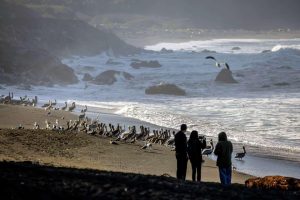
Possible sightings include pelicans, cormorants, gulls, murres, loons, grebes, scoters, oystercatchers, shorebirds, and other seabirds.
Brown Pelicans
Brown pelicans are among the most recognizable coastal birds. They may fly in lines, glide above waves, dive into the ocean, rest near harbors, sit on pilings, or follow fishing activity.
Cormorants
Cormorants are dark waterbirds often found near harbors, offshore rocks, jetties, river mouths, and coastal cliffs. They may dive for fish, swim low in the water, stand with wings extended, or gather in groups.
Gulls
Gulls are common but more diverse than many visitors realize. Size, leg color, bill shape, wing pattern, head markings, and age-related plumage can vary considerably.
Black Oystercatchers
Black oystercatchers are distinctive rocky-shore birds with dark bodies, long orange or reddish bills, pinkish legs, and loud calls. Observe them from a respectful distance, particularly during nesting season.
Sandpipers and Other Shorebirds
Small shorebirds may move rapidly across wet sand, mudflats, river mouths, estuaries, and rocky shorelines. Pay attention to bill length, leg length, body size, feeding style, and habitat.
Harbor Birdwatching
Harbors offer accessible birdwatching because birds are often concentrated around fishing activity, pilings, docks, breakwaters, sheltered water, boat channels, and river mouths.
Crescent City Harbor
A visit to Crescent City Harbor may provide opportunities to observe pelicans, cormorants, gulls, waterfowl, herons, raptors, and other marine birds. Activity can change with fishing boats, weather, tides, fish movement, and season.
Brookings Harbor
Brookings Harbor may also support a variety of birds. Travelers can combine birdwatching with a meal, shopping, photography, a harbor walk, or coastal sightseeing. Use binoculars to scan pilings, boat roofs, breakwaters, sheltered water, nearby trees, and the harbor entrance.
Remain in legal public areas and never interfere with harbor operations.
Estuaries and River Mouths
Estuaries are especially productive because fresh water and salt water meet. These areas may support herons, egrets, ducks, geese, shorebirds, gulls, eagles, osprey, kingfishers, grebes, and loons.
Great Blue Herons
Great blue herons are large birds often seen near rivers, estuaries, harbors, wetlands, shallow ocean water, and lagoons. They may stand completely still before striking at prey.
Egrets
Egrets are elegant white birds associated with shallow water and wetlands. They may walk slowly while searching for fish, frogs, aquatic insects, and other small animals.
Belted Kingfishers
Kingfishers may be found around rivers, lagoons, harbors, estuaries, and lakes. They often perch above water, give a loud rattling call, dive for fish, and fly quickly along shorelines.
Eagles, Osprey, and Raptors
Bald Eagles
Bald eagles may be seen near rivers, harbors, beaches, estuaries, lagoons, large trees, and open water. Adults have white heads and tails with dark bodies and broad wings. Juveniles may be mostly dark and mottled.
Osprey
Osprey are fish-eating raptors often found near water. They may hover, dive feet-first, carry fish in their talons, build large nests, and call repeatedly near nesting areas.
Hawks
Several hawks may occur around prairies, forest edges, roadsides, wetlands, agricultural land, and open coastal areas. Begin identification with size, wing shape, tail shape, flight pattern, and perching location.
Northern Harriers
Northern harriers may fly low above marshes, grasslands, prairies, and open wetlands. Their low, sweeping flight differs from many other hawks.
Peregrine Falcons
Peregrine falcons may occur near coastal cliffs, harbors, beaches, river areas, and locations with concentrated bird activity. Never approach cliff nesting areas.
Turkey Vultures
Turkey vultures may soar above roads, forests, beaches, open fields, and hillsides. Their shallow V-shaped wings and rocking flight pattern can help distinguish them from hawks.
Redwood Forest Birds
The redwoods support birds adapted to tall canopy, moist forest, large tree trunks, dense understory, fallen logs, and forest openings.
Possible birds may include woodpeckers, wrens, thrushes, chickadees, jays, nuthatches, ravens, owls, warblers, and other forest songbirds.
Woodpeckers
Woodpeckers may be detected by tapping, drumming, calls, bark movement, or flight between tree trunks. Look for their vertical posture, strong bills, clinging feet, and stiff tails.
Steller's Jays
Steller's jays are bold forest birds with dark heads, crests, blue bodies, loud calls, and curious behavior. They may appear around picnic areas, trails, campgrounds, cabins, and forest edges.
Ravens and Crows
Ravens and crows are intelligent birds found throughout the coast and forest. Ravens are often larger, with heavier bills and wedge-shaped tails, although identification can still be difficult from some angles.
Thrushes and Forest Songbirds
Some forest birds remain hidden among ferns, shrubs, low branches, and dense canopy. They may be identified primarily by song. Avoid playing loud recordings back to the birds.
Owls
Owls are rarely easy to observe. Travelers may hear them at night, near forest edges, during early morning, from quiet cabin areas, or along wooded roads. Responsible owl observation means no repeated call playback, bright lights, or approaching nests.
Migratory Birds
The Pacific Coast is an important migration corridor. Birds may move through the region during spring, fall, winter movements, and changes in weather.
Migration may bring shorebirds, waterfowl, songbirds, raptors, and seabirds. Exact timing can vary from year to year, and weather may cause birds to stop temporarily in unexpected places.
Spring
Look for migrating songbirds, courtship behavior, nest building, increased calling, returning swallows, shorebird movement, and waterfowl transitions.
Summer
Summer may include nesting seabirds, young birds, pelicans, cormorants, forest birds, raptors, and longer daylight hours.
Fall
Fall may bring migrating shorebirds, waterfowl, raptors, changing songbird populations, and increased activity at estuaries.
Winter
Winter may be productive for ducks, geese, loons, grebes, scoters, other coastal waterbirds, and eagles near rivers.
Birdwatching in Rain and After Storms
Light rain may produce interesting bird activity, particularly around harbors, estuaries, sheltered viewpoints, cabin windows, and wetlands.
After severe weather, birds may gather in sheltered harbors, estuaries, lagoons, protected coves, wetlands, and river mouths.
Bring Coastal Protection
- Waterproof jacket.
- Rain cover for binoculars.
- Lens cloth.
- Dry bag.
- Extra layers.
Avoid forests during high winds and exposed beaches during dangerous surf. Storm damage can create road closures, flooding, falling branches, and trail hazards.
Bird Photography
Bird photography requires patience and distance. Useful equipment may include a telephoto lens, extra batteries, memory cards, rain protection, a lens cloth, a monopod or tripod, and a comfortable camera strap.
Avoid approaching birds to fill the frame. Use a longer lens or create a wider environmental photograph that shows the bird within its habitat.
Focus on Behavior
Interesting photographs may show feeding, flying, diving, preening, calling, carrying nesting material, resting, or interacting with other birds.
Smartphone Bird Photography
Smartphones may work best for large nearby birds, flocks, harbor scenes, birds in landscapes, flight silhouettes, and family birdwatching memories. Do not approach wildlife to compensate for limited zoom.
Photographing Shorebirds
Move slowly, remain quiet, avoid direct approaches, stay outside feeding areas, and allow birds to come closer naturally. If birds repeatedly fly away, increase your distance.
Photographing Nesting Birds
Never photograph a nest in a way that may reveal it to predators, cause adults to leave, block access, create a crowd, disturb chicks, or damage surrounding vegetation. Use substantial distance and do not share precise locations of sensitive nests publicly.
Ethical Birdwatching
Responsible birdwatching means observing wildlife without changing its natural behavior.
Bird behavior should guide your distance. If the bird stops feeding, begins calling anxiously, or moves away because of you, back up.
Why Feeding Birds Is Harmful
Feeding may cause poor nutrition, aggressive behavior, dependence, disease, conflict with people, attraction to vehicles, increased predator exposure, and unnatural concentrations of birds.
This applies even to common birds such as gulls, jays, ravens, ducks, and geese. Keep food secured.
Birdwatching With Children
Children often enjoy birdwatching when it becomes a game rather than a long identification lesson.
Bird Bingo
Create simple challenges such as finding a bird swimming, diving, calling, flying in a group, or sitting on a post.
Color Search
Ask children to look for birds with different colors, rather than requiring exact species identification.
Listen and Freeze
Stop moving, close your eyes briefly, count the sounds you hear, and then look carefully for their sources.
Photography Challenge
Let children photograph large birds, habitats, flight silhouettes, or their favorite birdwatching moment.
Begin with large, visible species. Pelicans, herons, gulls, eagles, and cormorants are easier for children to notice than small forest birds.
Birdwatching for Different Travelers
For Older Adults
Harbor viewing, scenic overlooks, cabin observation, paved paths, benches, short wetland walks, wildlife drives, and accessible picnic areas may provide excellent options.
With Limited Mobility
Consider watching from the vehicle, accessible harbor areas, paved coastal overlooks, cabin decks, visitor-center areas, short boardwalks, and suitable picnic areas. Confirm accessibility before leaving.
With Dogs
Dogs may disturb birds even while leashed. Where pets are permitted, keep the leash short, prevent barking, avoid nesting areas, remain far from shorebirds, and follow all closures.
Some trails, beaches, and protected habitats prohibit pets. Verify the rules for each location.
Birdwatching Safety
Birdwatching often takes place near cliffs, roads, water, docks, forests, and changing weather. Remain aware of surf, tides, cliff edges, road traffic, slippery docks, wet rocks, forest hazards, falling branches, weather, limited cell service, and wildlife.
Binocular Safety Near Cliffs
- Stand on level ground.
- Remain behind barriers.
- Keep away from edges.
- Face a safe direction.
- Avoid stepping backward.
- Supervise children.
Never stare through binoculars while walking. Stop in a secure location first.
Roadside Birdwatching
Use legal pullouts, park fully outside the travel lane, avoid blind corners, do not block driveways, watch for vehicles, and limit sudden stops. The bird is not worth creating an accident.
Keep a Bird List
A simple bird list can turn a casual outing into an ongoing project.
An uncertain bird can be labeled possible, probable, unknown, or needs review. Accurate uncertainty is better than forced identification.
Create a White Rock Resort Bird Journal
Guests can record birds seen from the cabin, at the beach, in Crescent City, at the harbor, in Brookings, in the redwoods, near rivers, and at coastal overlooks.
Add drawings, photographs, daily totals, favorite sightings, new species, weather notes, and locations to revisit.
Sample Half-Day Coastal Birding Itinerary
Start at White Rock Resort
Drink coffee, watch the ocean and nearby trees, then drive to a coastal overlook and scan for pelicans, gulls, cormorants, and raptors.
Visit Crescent City Harbor
Observe birds from legal public areas and scan pilings, sheltered water, boats, and the harbor entrance.
Eat in Crescent City
Take a break before deciding whether to continue birdwatching or return to the cabin.
Return or Explore
Return to the cabin or take a short beach or forest walk appropriate for current conditions.
Sample Full-Day Birding Itinerary
River, Wetland, or Estuary
Look for herons, egrets, ducks, waterfowl, and raptors.
Crescent City Harbor
Scan for marine birds and observe changing activity around sheltered water.
Redwood Forest
Take a short walk and listen for woodpeckers, jays, thrushes, and other forest birds.
Return to White Rock Resort
Record the day's sightings, review photographs, and prepare for the next outing.
Best General Recommendation for Beginners
For first-time birdwatchers, combine three easy habitats:
1. Coast
Watch coastal birds from White Rock Resort or a public overlook.
2. Harbor
Visit Crescent City Harbor for pelicans, cormorants, gulls, waterbirds, and raptors.
3. Redwoods
Take a short forest walk and listen for woodpeckers, jays, ravens, and songbirds.
Keep It Simple
The variety of habitats makes identification more interesting without requiring a long or difficult trip.
Why White Rock Resort Is a Strong Birdwatching Base
White Rock Resort places guests near Pacific Ocean views, beaches, Crescent City Harbor, Brookings Harbor, rivers, estuaries, wetlands, Redwood forests, coastal prairie, scenic overlooks, and wildlife corridors.
Depending on cabin location and season, birdwatching may begin directly from the property.
Guests can explore several habitats during the day and return to a comfortable coastal cabin where they can review photographs, update bird lists, read field guides, recharge equipment, watch evening birds, and prepare for the next outing.
Questions to Ask Before Birdwatching
Common Birdwatching Mistakes
Walking Constantly
Remain still long enough for birds to return to normal activity.
Talking Loudly
Quiet observation produces better results.
Looking Only at the Sky
Scan water, ground, trees, shrubs, and forest floors too.
Expecting Immediate Identification
Some birds require later research and comparison.
Approaching Too Closely
Use binoculars rather than moving closer to wildlife.
Feeding Birds
Keep food secured and allow birds to behave naturally.
Ignoring the Tide
Coastal feeding areas change significantly with water levels.
Disturbing Nests
Remain far away from nesting birds and sensitive habitat.
Birdwatching Near Crescent City & Brookings
Is Crescent City good for birdwatching?
Yes. The area combines beaches, harbors, rivers, estuaries, wetlands, and redwood forests.
What birds can you see near Crescent City?
Possible birds include pelicans, cormorants, gulls, herons, egrets, eagles, osprey, hawks, ducks, shorebirds, ravens, jays, woodpeckers, and forest songbirds.
Is Brookings good for birdwatching?
Yes. Brookings offers harbor, coastal, river, forest, and park habitats.
Do I need binoculars?
No, but binoculars greatly improve the experience and allow you to observe birds without approaching them.
What is the best time of day?
Early morning is often productive, but tides, habitat, weather, and season also influence bird activity.
Can children enjoy birdwatching?
Yes. Games, checklists, drawing, photography, and large visible birds can make the activity especially engaging.
Are birds present year-round?
Yes. The species and numbers change by season.
What is the best place for beginners?
Harbors and coastal overlooks are excellent because many birds are large and relatively visible.
Can I feed the birds?
No. Feeding may harm birds and change their natural behavior.
Can dogs join birdwatching outings?
Only where permitted, and they should remain controlled and far from wildlife.
Is birdwatching possible in rain?
Yes, especially from harbors, sheltered viewpoints, cabin windows, and forests during light rain and low wind.
Can I photograph nests?
Use extreme distance and never disturb nesting birds or reveal sensitive nest locations.
What should I bring?
Binoculars, layers, rain protection, water, a notebook, and a bird guide are useful.
What is the most important birdwatching rule?
Remain far enough away that the bird continues its normal behavior.
Let the Birds Come to You
You may hear a kingfisher near the water, a woodpecker behind the trees, a jay in the canopy, a heron calling from an estuary, shorebirds moving along the beach, an eagle above the river, or a hidden songbird inside the ferns.
Birdwatching becomes much easier when the ears begin searching before the eyes.
Related Articles
Continue planning your Northern California coastal vacation:
- What Wildlife Can You See Near Crescent City, Brookings, and the Redwood Coast?
- Where Are the Best Places to Watch Whales Near Crescent City and Brookings?
- A Complete Guide to Tide Pools Near Crescent City and Brookings
- What Are the Best Beaches Near Crescent City and the California-Oregon Border?
- What Are the Best Redwood Parks and Scenic Drives Near the Coast?
- What Are the Best Family-Friendly Activities Near Crescent City and Brookings?
- What Are the Best Rainy-Day Activities Near Crescent City and Brookings?
- What Should You Pack for a Northern California Coastal Vacation?
Discover Redwood Coast Birdlife From White Rock Resort
Birdwatching adds another dimension to a coastal vacation. It encourages travelers to move more slowly, listen carefully, and notice the relationship between ocean, forest, river, harbor, and sky.
Pelicans may glide above the surf. Cormorants may gather on harbor structures. Herons may wait silently beside an estuary. Eagles may circle above a river. Woodpeckers may tap high in the redwoods. Shorebirds may follow the tide. Ravens and jays may call from the forest edge.
Every habitat offers something different.
Visitors do not need to identify every bird to appreciate the experience. Bring binoculars. Remain quiet. Respect nesting areas. Keep pets controlled. Never feed wildlife. Leave enough distance for birds to continue behaving naturally.
At White Rock Resort, guests can begin the morning watching coastal birds, spend the day exploring forests, harbors, wetlands, and beaches, and return to a comfortable cabin with a longer bird list and a deeper appreciation for the living landscape of the Redwood Coast.
Experience the Redwood Coast
Make White Rock Resort your coastal home base while you explore the beaches, harbors, redwood forests, rivers, and wildlife of Crescent City and Brookings.
Explore Cabins & AvailabilityPlanning information should be confirmed with current local, park, wildlife, tide, weather, and road authorities before traveling. Wildlife sightings are never guaranteed, and visitors should always follow current closures, accessibility information, and wildlife-protection rules.