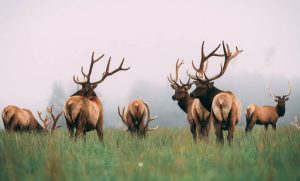
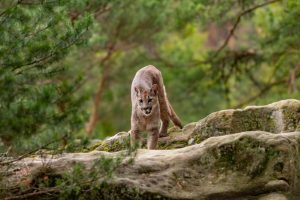
Roosevelt elk are among the most impressive animals travelers may encounter along the Redwood Coast. A mature bull can appear enormous beside a road, prairie, beach, or redwood forest.
Visitors may see:
Roosevelt elk are one of the most frequently observed large animals in Redwood National and State Parks. They occur throughout the park system, although official park guidance identifies Prairie Creek Redwoods State Park, Gold Bluffs Beach, Bald Hills Road, and the Orick area as locations where sightings are most frequent.
Seeing elk in a natural setting can become one of the highlights of a Northern California coastal vacation.
However, elk are not domesticated animals. They are large, fast, powerful, protective, and unpredictable. The best elk encounter is one observed quietly from a substantial distance.
This guide explains where visitors may look for Roosevelt elk near Crescent City and the redwood parks, how their behavior changes through the seasons, how to photograph them responsibly, and how families and pet owners can remain safe.
What Are Roosevelt Elk?
Roosevelt elk are the largest subspecies of elk in North America. They inhabit coastal forests and mountains west of the Cascade Range, extending from Northern California through the Pacific Northwest.
They often favor edge habitat where open grassy areas meet forest, providing both food and nearby cover.
Coastal Prairie
Open grasslands provide important feeding areas and visibility.
Redwood Forest
Forest provides shade, shelter, and nearby cover.
River Corridors
Waterways and surrounding vegetation can provide productive habitat.
Open Meadows
Meadows offer grass, space for herds, and calving habitat.
A mature bull can weigh as much as approximately 1,200 pounds, which is one reason visitors must give these animals substantial space.
Why Are Roosevelt Elk Important to the Redwood Coast?
Roosevelt elk are an important part of the region’s natural and conservation history.
Their historic range extended along much of the Pacific Coast, but hunting and habitat loss greatly reduced their numbers. By the early twentieth century, only a very small number remained in California.
Protection of habitat, including the establishment of Prairie Creek Redwoods State Park around one of the remaining herds, helped the population recover.
A Symbol of the Redwood Coast
Today, elk remain a visible symbol of wildlife conservation, redwood forest protection, coastal prairie habitat, and the ecological connection between forests and open meadows.
Can You See Roosevelt Elk Near Crescent City?
Yes. Roosevelt elk occur throughout Redwood National and State Parks, including areas north and south of the Klamath River.
However, visitors should understand that the most reliable elk-viewing areas are generally south of Crescent City.
Elk may also occasionally be seen closer to Crescent City, including open prairie areas near Crescent Beach and portions of the Coastal Trail.
A sighting near Crescent City is possible, but visitors seeking the best chance of observing a herd should generally plan a wildlife drive farther south.
Wildlife Sightings Are Never Guaranteed
Elk move naturally according to food, weather, human activity, season, time of day, reproduction, disturbance, and availability of shelter. A meadow that contains twenty elk one morning may appear empty that afternoon. Plan to visit suitable habitat and enjoy the redwoods, prairie, beaches, and scenic drive whether elk appear or not.
Elk Prairie
Elk Prairie, within Prairie Creek Redwoods State Park, is one of the best-known Roosevelt elk viewing areas on the Redwood Coast.
Prairie Creek protects old-growth redwoods, open meadows, and coastal habitat where elk are regularly observed. California State Parks specifically describes the park’s meadows as being grazed by Roosevelt elk.
Open Meadow Views
Open habitat can make distant herds easier to observe.
Forest Scenery
Visitors may see elk with towering redwoods as a backdrop.
Nearby Facilities
Parking and developed visitor areas can make viewing practical.
Wildlife Photography
Use binoculars or a telephoto lens rather than approaching animals.
Elk Prairie Campground is located approximately six miles north of Orick and is known for both grazing Roosevelt elk and black-tailed deer.
Why Elk Prairie Is So Productive
Elk favor areas where open grassland borders forest.
The Prairie Provides
Grass for feeding, open visibility, space for herds, calving habitat, and access to nearby shelter.
The Forest Provides
Shade, protection, cover, shelter from poor weather, and escape from disturbance.
This combination makes prairie-and-forest edges particularly attractive to elk.
How to View Elk at Elk Prairie
When elk are present:
Visitors may sometimes obtain a better view from a parking or picnic area than from a trail. There is no need to move closer.
Prairie Creek Redwoods State Park
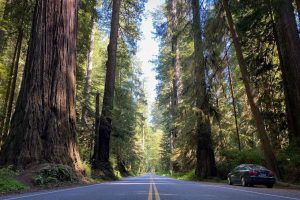
The broader Prairie Creek Redwoods State Park area is one of the strongest destinations for combining elk viewing with redwood sightseeing.
Old-Growth Forest
Explore some of the region’s iconic redwood habitat.
Open Meadows
Look for Roosevelt elk in productive prairie habitat.
Scenic Roads
Combine wildlife viewing with a broader coastal drive.
Wildlife Habitat
Elk share the landscape with many other Redwood Coast species.
A visit may combine morning elk observation, a short redwood walk, a picnic, scenic driving, coastal viewing, and a visitor-center stop.
Wildlife Viewing Near the Visitor Center
California State Parks notes that visitors walking near the Prairie Creek visitor-center area and parking lot may have an excellent chance of seeing Roosevelt elk.
This can make the area especially practical for:
Elk may appear close to developed areas, but that does not make them tame. Maintain the same distance you would in a remote meadow.
Gold Bluffs Beach
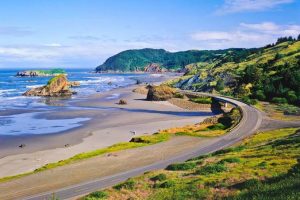
Gold Bluffs Beach provides one of the region’s most dramatic combinations of coastal scenery, grassy habitat, redwood park access, Roosevelt elk, and beach landscape.
The National Park Service specifically identifies Gold Bluffs Beach as a frequent elk-viewing location.
A Unique Coastal Elk Setting
Visitors may see elk near open grassy areas, beside the beach, around campground habitat, along the road, or at the edge of forest cover.
Important Access Considerations for Gold Bluffs Beach
Access to Gold Bluffs Beach requires careful planning.
Before driving there, confirm road condition, vehicle suitability, weather, current access rules, required permits or reservations, and day-use availability.
Some areas within Redwood National and State Parks may require permits or reservations at certain times, so travelers should check official park guidance before departure.
Elk Safety at Gold Bluffs Beach
Never allow the beach setting to create a false sense of security.
Elk may be near tents, vehicles, walking routes, picnic areas, or between visitors and the forest.
The Orick Area
The town of Orick and surrounding open areas are well known for Roosevelt elk sightings.
The National Park Service notes that elk are often spotted around Orick near the southern end of Redwood National and State Parks.
Open Fields
Open habitat can make distant herds easier to spot.
Prairie Habitat
Elk may graze in open areas near forest edges.
Roadside Areas
Wildlife may occasionally be visible from public roads.
Forest Edges
Scan transition areas where open habitat meets cover.
Because much of the land around Orick may be privately owned, visitors must respect fences, signs, driveways, fields, private roads, and agricultural operations.
Do not enter private property to approach a herd.
Roadside Elk Viewing Near Orick
Elk may sometimes be visible from the roadway.
A wildlife sighting must never create a traffic hazard.
Bald Hills Road
Bald Hills Road is another official elk-viewing area identified by Redwood National and State Parks.
The route passes through redwood forest, oak woodland, open prairie, higher-elevation landscapes, and wildlife habitat.
Because the area differs from the coastal meadows around Prairie Creek, it may provide a broader view of the habitats elk use.
Crescent Beach and Nearby Prairie Areas
Travelers who do not want to drive as far south may look for elk in suitable habitat closer to Crescent City.
The National Park Service notes that Roosevelt elk regularly graze in open prairie areas adjacent to Crescent Beach along the Coastal Trail corridor.
A visit may include coastal scenery, short walking opportunities, birdwatching, ocean views, and possible elk observation.
However, sightings here may be less consistent than around Prairie Creek, Gold Bluffs Beach, and Orick. Treat elk as a possible bonus rather than the only reason for the outing.
What Is the Best Time of Day to See Elk?
Elk may be active at any time. However, visitors often have better opportunities during early morning and late afternoon.
Early Morning
Possible advantages include quieter roads, less visitor activity, cooler temperatures, grazing animals, soft photography light, and morning fog.
Late Afternoon
Possible advantages include renewed feeding, elk emerging from forest cover, softer light, reduced midday heat, and greater movement near meadow edges.
Midday sightings are still possible. Do not assume that an empty morning means the herd will remain absent all day.
Best Elk-Viewing Seasons
Elk remain in the region throughout the year, but behavior changes significantly by season.
Winter
Visitors may see herds feeding in open areas, bulls carrying antlers, elk using lower-elevation habitats, animals moving between forest and prairie, and wet or foggy landscapes.
Spring
Visitors may observe fresh grass feeding, cows separating from larger groups, increasing calving activity, and bulls beginning new antler growth.
Early Summer
This is an important calving period. Calves are commonly born in May and June, often in open grassy areas.
Late Summer & Fall
Bulls may carry increasingly large antlers. Groups may begin changing as the fall breeding season approaches. During the rut, bulls may become especially active, territorial, and aggressive.
Calving Season
Calving season generally occurs in late spring, particularly from late May through June.
During this period, cow elk may be extremely defensive of their calves.
A calf may appear alone in grass, hidden near shrubs, resting quietly, or separate from the herd.
Do Not Assume a Calf Is Abandoned
Its mother may be nearby and watching. Never approach a resting calf or attempt to move closer for a photograph.
Safety During Calving Season
A mother elk may charge if she believes her calf is threatened.
The Fall Rut
The rut is the fall mating season. During the rut, bull elk may bugle, gather cows, challenge other bulls, display antlers, rub vegetation, move frequently, defend a herd, and react aggressively to perceived threats.
What Is an Elk Bugle?
A bull elk’s bugle is a distinctive vocalization associated with the breeding season. It may begin as a high sound and develop into lower notes.
Visitors may hear bugling across a meadow, from forest cover, near a herd, early in the morning, late in the afternoon, or during evening hours.
Do not imitate a bugle near elk. A bull may interpret the sound as a challenge.
Safety During the Rut
Photographs should always be taken with a long lens.
How Far Away Should You Stay?
The National Park Service recommends remaining at least 25 yards, or 75 feet, from elk and advises that even greater distance is appropriate during spring calving and the fall rut.
Stay farther away whenever possible.
Binoculars
Observe details without approaching.
Telephoto Lens
Capture wildlife from a safe distance.
Vehicle Barrier
When legally parked, a vehicle can provide additional protection.
Viewing Areas
Use established public viewing locations whenever possible.
How Can You Tell If You Are Too Close?
An elk may signal discomfort by:
If any animal alters its behavior because of you, increase your distance.
What Should You Do if an Elk Approaches?
Never assume the animal is approaching because it is friendly.
Never Feed Elk
Feeding elk can change natural behavior, make animals approach vehicles, increase aggression, create road hazards, cause conflict with visitors, expose animals to inappropriate food, encourage dependence, and result in management action against the animal.
Do not offer fruit, bread, vegetables, pet food, snacks, salt, grass pulled by hand, or anything else.
Keep Wildlife Wild
Even one feeding can reinforce dangerous behavior.
Elk and Vehicles
Elk may cross roads suddenly. They may also stand on the shoulder, in a travel lane, around blind curves, near forest edges, or beside parked vehicles.
A calf or second group may follow the first animal.
Do Not Cause an Elk Traffic Jam
When elk appear beside a road, visitors may stop unexpectedly. This can create rear-end collisions, blocked travel lanes, dangerous pedestrian movement, limited emergency access, and stress for the animals.
Use only legal pullouts and parking areas. If no safe stopping place exists, continue driving.
Photographing Roosevelt Elk
Roosevelt elk are excellent photography subjects because they may appear against redwood trees, coastal fog, open prairie, beaches, forest edges, morning light, rain, and mountain landscapes.
Telephoto Lens
Stay far away while filling more of the frame.
Binoculars
Scout the herd before deciding where to photograph.
Extra Battery
Useful during longer wildlife-viewing sessions.
Rain Protection
Coastal weather can change quickly.
The safest image is taken from a substantial distance.
Photograph Elk Behavior, Not Just Portraits
Interesting photographs may include grazing, herd movement, a bull bugling from a distance, cows and calves, elk emerging from fog, animals crossing between forest and meadow, reflections after rain, elk beneath tall redwoods, or a herd resting together.
Do Not Use Food for Photography
Never place food near roads, vehicles, cabins, camera locations, trails, or picnic areas.
Baiting wildlife is irresponsible and may be illegal. A photograph created by changing the animal’s behavior is not an authentic wildlife image.
Avoid Crowding Elk
Responsible photographers model safe behavior for others.
Elk Photography With a Smartphone
A smartphone may not produce a close wildlife portrait from a safe distance.
Instead, photograph the herd within the meadow, elk beneath the redwoods, the landscape, your family observing from far away, foggy prairie scenery, or the overall wildlife experience.
Watching Elk With Children
Elk viewing can be an excellent family activity.
Before leaving the vehicle, explain:
Children may underestimate distance and danger. Adults must remain in control of the outing.
Create an Elk Observation Activity
Children may record:
This encourages careful observation without approaching.
Never Place a Child Near an Elk for a Photograph
The photograph is never worth the risk.
Elk Viewing With Toddlers
A five-minute safe observation may be enough.
Elk Viewing for Older Adults
Older travelers may prefer viewing from a vehicle, developed pullouts, Elk Prairie parking areas, short level paths, visitor-center areas, bench-based observation, and scenic driving.
Confirm parking, restrooms, walking surface, seating, weather protection, and accessibility before departure.
An easy overlook can provide a better experience than a long wildlife hike.
Elk Viewing With Limited Mobility
Possible options may include:
California State Parks lists accessible features within Prairie Creek Redwoods State Park, although visitors should verify the exact facilities and current conditions needed for their trip.
Elk and Dogs
Dogs can trigger strong defensive behavior in elk. An elk may interpret a dog as a predator.
A dog may bark, lunge, pull toward the herd, escape the leash, chase, cause an elk to charge, or place the owner directly in danger.
The National Park Service requires pets in designated parking and picnic areas to remain on a leash no longer than six feet. Pet rules vary across trails and park areas, so visitors must confirm where dogs are permitted.
What to Do When Elk Are Present and You Have a Dog
A dog-friendly trip does not mean every wildlife viewing area is appropriate for the dog.
Elk on Trails
Occasionally, an elk may occupy or cross a trail.
The elk has the right of way.
Elk Near Campgrounds or Picnic Areas
Elk may enter developed areas. Do not assume they are accustomed to close contact.
Never use a campsite or picnic table as a reason to defend your space against an elk. Move away and contact a ranger if necessary.
What Should You Pack for an Elk-Viewing Trip?
Keep food packed away while elk are nearby.
Check Current Conditions Before Leaving
Before driving from White Rock Resort, review:
Park access and road conditions can change. Official Redwood National and State Parks publications and current-condition resources should be consulted before travel.
Sample Half-Day Elk-Viewing Itinerary
Head South
Leave White Rock Resort after breakfast. Drive south toward Prairie Creek. Stop only at legal viewpoints and check Elk Prairie from a safe public area.
Explore Prairie Creek
Visit the Prairie Creek visitor-center area, watch the meadow with binoculars, and take a short redwood walk if conditions are appropriate.
Take a Break
Eat a picnic in an approved area or continue toward Orick.
Look Around Orick
Look for elk around public viewing areas near Orick and return north before evening.
This itinerary provides a good balance of wildlife and redwoods.
Sample Full-Day Elk and Redwood Itinerary
Elk Prairie
Visit Elk Prairie, observe elk from a safe distance, and walk a short redwood trail.
Lunch and Orick
Eat lunch and visit the Orick area using public pullouts only.
Scenic Drive
Take a scenic drive through appropriate prairie habitat, stop at a coastal viewpoint, and return toward White Rock Resort.
Slow Down
Review photographs, record sightings, and prepare for the next day.
Sample Gold Bluffs Beach Itinerary
Confirm Conditions
Confirm road access, permits or reservations, vehicle suitability, weather, and surf.
Drive Carefully
Drive carefully to Gold Bluffs Beach, watch for elk along the road, and remain far away from all animals.
Enjoy the Coast
Enjoy a picnic in an approved area and explore only open and safe locations.
Return Safely
Return before poor visibility or darkness. Stop at Elk Prairie if time permits.
Gold Bluffs Beach should not be attempted without current access information.
Sample Family Elk Day
Observe
Give children an elk observation sheet, visit Elk Prairie, and use binoculars from a safe location.
Learn
Eat lunch, visit the visitor center, and learn about redwood wildlife.
Explore
Take a short family-friendly forest walk and return to White Rock Resort.
Remember
Draw elk, review photographs, and read about Roosevelt elk.
Sample Photography Day
Find the Light
Arrive near Elk Prairie, remain in a designated viewing area, and photograph meadow light and wildlife.
Watch Behavior
Observe changing herd behavior, use a telephoto lens, and avoid moving closer.
Go Wider
Look for wider landscape images near Orick or another public viewing area. Stop photographing if animals become alert.
Back Up
Back up files and record location and behavior notes.
Sample Accessible Elk-Viewing Day
Prairie Creek
Drive to Prairie Creek Redwoods State Park and use developed parking. Observe from the vehicle or accessible public area.
Rest
Visit nearby facilities and eat lunch.
Scenic Drive
Take a scenic drive through Orick and use legal roadside pullouts before returning north.
Confirm accessibility and current facilities before departure.
Sample Fall-Rut Viewing Day
Keep Your Distance
Arrive early, remain far from bulls and herds, stay close to the vehicle, and use binoculars and a telephoto lens.
Change the Scene
Leave crowded locations, eat lunch, and visit the redwoods.
Know When to Leave
Return only to a developed viewing area and leave immediately if a bull approaches or becomes agitated.
During the rut, safety must take priority over photography.
Sample Spring-Calving Viewing Day
Observe Carefully
Observe open meadows from a substantial distance, watch for cows and calves, avoid tall grass, and keep pets away.
Visit the Forest
Visit a visitor center and take a forest walk in an area without elk blocking access.
Vehicle Viewing
Use vehicle-based viewing and do not approach isolated calves.
Cow elk may be especially defensive during this season.
Questions to Ask Before an Elk-Viewing Trip
Common Elk-Viewing Mistakes
Approaching for a Better Photograph
Use a zoom lens.
Assuming Roadside Elk Are Tame
They remain wild and unpredictable.
Standing Between Herd Members
Always leave open movement routes.
Approaching a Calf
The mother may be nearby.
Imitating a Bull's Bugle
This may be perceived as a challenge.
Bringing a Barking Dog Near a Herd
Return the dog to the vehicle.
Feeding Elk
Never offer food.
Stopping in a Traffic Lane
Use legal pullouts only.
Walking Into Tall Grass During Calving Season
A calf or defensive cow may be hidden.
Using a Smartphone as an Excuse to Move Closer
Take a wider landscape image.
Surrounding an Animal
Leave an escape route.
Ignoring Seasonal Behavior
Calving season and the rut require greater caution.
Promising Children a Guaranteed Sighting
Say that you are going to look for elk.
Focusing Only on the Animals
Enjoy the prairie, redwoods, beaches, and scenic drive as well.
How to Improve Your Chances of Seeing Elk
Visit Suitable Habitat
Look for open grassy areas next to forest.
Travel Early or Late
Elk may be actively feeding.
Remain Quiet
Avoid sudden movement and noise.
Use Binoculars
Scan meadow edges and distant tree lines.
Watch More Than One Area
Combine Elk Prairie, Orick, and another suitable public location.
Stay Patient
A herd may emerge after several minutes.
Ask Rangers
Park staff may know where elk have recently been active.
Accept Uncertainty
Elk are free-ranging animals.
Best General Recommendation for White Rock Resort Guests
For most first-time visitors, the strongest elk-viewing plan is:
Depart White Rock Resort early.
Drive south toward Prairie Creek Redwoods State Park.
Check Elk Prairie from a developed public area.
Visit the Prairie Creek visitor-center surroundings.
Continue toward Orick if no elk are visible.
Add a short redwood walk.
Return before dark.
This route provides a good opportunity to see Roosevelt elk, redwood forest, coastal prairie, birds, deer, and scenic landscapes.
Even without an elk sighting, the day remains worthwhile.
Why White Rock Resort Is a Strong Base for Elk Viewing
White Rock Resort gives travelers a comfortable coastal base from which they can explore both the northern and southern portions of the Redwood Coast.
Guests may combine elk viewing with:
After a wildlife day, guests can return to the resort to review photographs, prepare dinner, recharge equipment, record sightings, rest, and plan the next outing.
The coast and the redwoods can be part of the same day.
A White Rock Resort stay gives travelers the flexibility to explore wildlife habitat during the day and return to a comfortable coastal cabin afterward.
Roosevelt Elk Near Crescent City
Where is the best place to see Roosevelt elk near Crescent City?
Prairie Creek Redwoods State Park, particularly Elk Prairie, is one of the strongest options. Elk are also frequently observed around Gold Bluffs Beach, Bald Hills Road, and Orick.
Are elk found close to Crescent City?
Yes. They may occasionally be seen near Crescent Beach and other suitable prairie habitat, but sightings are generally more frequent farther south.
Are Roosevelt elk dangerous?
Yes. They are large, fast, wild, and unpredictable, especially around calves and during the fall rut.
How far should visitors remain from elk?
The National Park Service recommends at least 25 yards, or 75 feet, with greater distances advisable during calving season and the fall rut.
What is the best time of year to see elk?
Elk remain in the region throughout the year, although behavior and viewing conditions change by season.
When are elk calves born?
Calves are commonly born during May and June.
When is the elk rut?
The rut occurs during fall.
Why are bulls more dangerous during the rut?
They may become territorial, aggressive, and highly focused on defending a herd.
Can visitors approach a calf?
No. A protective cow may be nearby.
Can children safely view elk?
Yes, when children remain beside adults and the group maintains a substantial distance.
Can dogs accompany elk-viewing trips?
Only in areas where pets are permitted. Dogs should remain securely leashed and far from elk.
Can visitors feed elk?
No.
Can elk be photographed with a smartphone?
Yes, but visitors should take wider landscape photographs rather than approaching.
Is Gold Bluffs Beach easy to reach?
Access involves a narrow, primarily unpaved road that may not be appropriate for all vehicles. Check current official conditions before traveling.
Are sightings guaranteed at Elk Prairie?
No. Elk move freely and may not be visible during every visit.
What should visitors do if elk block a trail?
Stop, back away, and wait or choose another route.
What is the most important elk-viewing rule?
Remain far enough away that the elk does not change its behavior because of your presence.
Let the Landscape Reveal the Elk
Do not look only at the middle of an open meadow.
Scan the edges where prairie meets forest.
Roosevelt elk often remain partially concealed near:
Use binoculars and watch quietly.
A meadow that appears empty at first may slowly reveal antlers above the grass, a cow stepping from the forest, a calf resting near vegetation, or an entire herd hidden near the tree line.
Related Articles
Wildlife Near the Redwood Coast
What Wildlife Can You See Near Crescent City, Brookings, and the Redwood Coast?
Birdwatching
The Ultimate Guide to Birdwatching Near Crescent City, Brookings, and the Redwood Coast
Whale Watching
Where Are the Best Places to Watch Whales Near Crescent City and Brookings?
Tide Pools
A Complete Guide to Tide Pools Near Crescent City and Brookings
Redwood Parks
What Are the Best Redwood Parks and Scenic Drives Near the Northern California Coast?
Family Activities
What Are the Best Family-Friendly Activities Near Crescent City and Brookings?
Beaches
What Are the Best Beaches Near Crescent City and the California-Oregon Border?
Coastal Packing Guide
What Should You Pack for a Northern California Coastal Cabin Vacation?
Experience Roosevelt Elk Country From White Rock Resort
Roosevelt elk represent the wild character of the Redwood Coast. They move between ancient forests, coastal prairie, river corridors, open fields, beaches, and fog-covered meadows.
Seeing a herd beneath towering redwoods can create a lasting memory. But the experience must be based on respect.
Explore White Rock ResortExperience Roosevelt Elk Country From White Rock Resort
Roosevelt elk represent the wild character of the Redwood Coast.
They move between:
Seeing a herd beneath towering redwoods can create a lasting memory.
But the experience must be based on respect.
Remain far away. Use binoculars. Keep children close. Secure pets. Never feed elk. Do not approach calves. Give bulls even more room during the fall rut. Use safe pullouts. Allow the animals to choose their own route.
At White Rock Resort, guests can begin the day beside the Pacific Ocean, travel south into Roosevelt elk habitat, explore some of the world’s most beautiful redwood landscapes, and return to a comfortable coastal cabin with photographs and memories of one of Northern California’s most extraordinary wild animals.
Planning information researched from White Rock Resort, National Park Service, and California State Parks. Check official sources for current alerts, restrictions, road conditions, permits, reservations, wildlife guidance, and operating information before traveling.