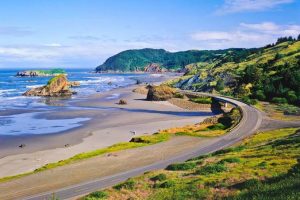
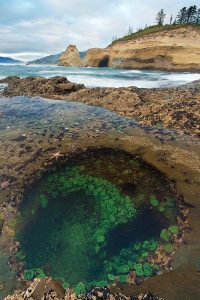
When the tide retreats along the rocky shoreline near Crescent City and Brookings, an extraordinary hidden world appears. Tide pools become temporary underwater habitats where visitors can observe sea stars, anemones, crabs, mussels, barnacles, small fish, and other marine life without entering the ocean.
Every tide pool is different. Tides change daily, ocean conditions vary, seasons influence marine life, sunlight changes visibility, and wildlife moves naturally from one pool to another.
This guide explains how to safely enjoy tide pools near Crescent City, Brookings, and the Redwood Coast while protecting the fragile marine ecosystems that make these coastal areas so special.
The tide pool is a living ecosystem.
Visitors are guests within this environment. The best experience is to observe carefully, move slowly, and leave every animal, shell, rock, and piece of marine life exactly where it belongs.
What Is a Tide Pool?
A tide pool forms when seawater becomes trapped among rocky formations after the tide recedes. These pools temporarily create miniature marine habitats.
Animals living in tide pools must survive constantly changing conditions, including:
Many organisms have developed remarkable adaptations that allow them to survive between high tides.
Why Tide Pools Are So Special
Tide pools provide one of the easiest opportunities to observe marine life without entering the ocean. Visitors can often see animals only a few inches away while remaining safely on shore.
Unlike aquariums, these are completely natural environments. Every organism continues its normal life cycle, and visitors are simply guests within that ecosystem.
When Should You Visit Tide Pools?
The best tide pooling usually occurs during low tide, calm surf, good visibility, and daylight.
Low Tide
Lower tides expose more rocks, larger pools, and a greater variety of marine life.
Calm Surf
Low tide does not automatically mean safe conditions. Wave action must also be manageable.
Good Visibility
Clear conditions make it easier to identify animals and observe movement beneath the water.
Daylight
Daylight provides the visibility needed to navigate slippery and uneven rocky surfaces safely.
Why Low Tide Matters
During high tide, most tide pools disappear beneath the ocean. At lower tides, visitors gain access to additional rocky shelves, larger pools, and more marine organisms.
Never attempt to reach tide pools before the tide has fallen sufficiently. Plan your visit around the tide rather than trying to force the schedule around your plans.
Check Ocean Conditions
Even at low tide, visitors should review:
Low tide alone does not guarantee safe conditions. Dangerous surf can make tide pooling unsafe regardless of tide level.
Best Tide Pool Locations
Some of the region's best-known tide pool areas include:
Enderts Beach
Widely recognized as one of the premier tide-pooling destinations in Redwood National and State Parks.
Crescent Beach
Rocky sections may provide opportunities to observe intertidal life when tides and conditions are favorable.
Point St. George
Rocky coastal areas can reveal marine life during appropriate tide conditions and safe access.
Harris Beach
Rocky formations may contain anemones, algae, barnacles, mussels, small fish, and shore crabs.
Other portions of the Samuel H. Boardman coastline and public rocky intertidal areas may also provide opportunities. Always remain within legal public access areas and obey seasonal closures.
What Marine Life Might You See?
Depending on conditions, visitors may observe:
Some animals are obvious. Others require careful observation.
Sea Stars
Sea stars are among the most recognizable tide pool animals. They may appear orange, purple, brown, or red.
Sea stars move slowly using hundreds of tube feet located underneath their bodies.
Giant Green Sea Anemones
Sea anemones resemble underwater flowers. Underwater, they open colorful tentacles. When exposed to air, they often close into rounded shapes.
Their tentacles contain specialized stinging cells used to capture tiny prey.
Visitors should never press, poke, pull, or touch them.
Hermit Crabs and Shore Crabs
Hermit crabs occupy empty shells abandoned by snails. As they grow, they must locate larger shells. Watching them move, change direction, or compete for shells can be fascinating.
Small shore crabs often hide beneath rocks and inside crevices. Visitors may notice quick movement and excellent camouflage.
Mussels and Barnacles
Mussels attach firmly to rocks using strong fibers. Large mussel beds help protect young marine animals, algae, small fish, and numerous invertebrates.
Barnacles may appear motionless, but underwater they actively feed by extending tiny feather-like appendages.
Stay on bare rock whenever possible.
Mussel and barnacle communities may be slippery, sharp, easily crushed, and important habitat for smaller organisms.
Limpets and Chitons
Limpets resemble small cones attached to rocks. They slowly graze algae and many return repeatedly to the exact same resting location.
Chitons possess eight overlapping shell plates and cling tightly to rocks. Because they blend into the surrounding surface, many visitors overlook them completely.
Small Tide Pool Fish
Tiny fish may dart between rocks or hide beneath seaweed. They often blend with the bottom and remain still until disturbed.
Watch patiently. Movement often reveals fish that seemed invisible moments earlier.
Seaweed and Algae
Tide pools contain many types of marine plants and algae. These provide shelter, oxygen, food, protection, and nursery habitat.
Do not pull seaweed from rocks. Even apparently loose plants may support numerous small animals.
Why Marine Life Should Never Be Collected
Removing animals or shells may:
Many seemingly empty shells eventually become homes for hermit crabs.
Walking Safely Around Tide Pools
Tide pool rocks can be extremely slippery.
Wear:
Avoid flip-flops, bare feet, and smooth-soled shoes.
Walk slowly and test each step.
Never Turn Your Back on the Ocean
While observing tide pools, continue watching incoming waves.
Sneaker waves can reach farther than expected, knock visitors down, and sweep people into the ocean.
Stay Off Unstable Rocks
Some rocks become unstable during storms. Others are covered with algae that create extremely slippery surfaces.
Avoid climbing:
There is rarely a need to climb for better viewing.
Tide Pool Etiquette
Good tide pool etiquette includes:
Future visitors deserve the same experience.
Should You Turn Over Rocks?
Generally, no.
Turning rocks may:
If a rock is accidentally moved, replace it exactly as you found it.
Can Children Enjoy Tide Pools?
Absolutely. Children often become fascinated by tiny crabs, colorful anemones, sea stars, small fish, hermit crabs, shells, and algae.
The experience becomes even better when adults encourage observation instead of collecting.
Turn the visit into a wildlife discovery.
Ask children what they notice, encourage them to look for movement, and remind them that every animal and shell stays where it was found.
Tide Pool Scavenger Hunt
Children can look for:
Everything should remain exactly where it is found.
Tide Pool Photography Tips
Photographing tide pools requires patience.
Helpful techniques include:
Avoid standing inside fragile pools simply to obtain a better photograph.
Smartphone Photography
Modern phones can capture excellent tide pool photographs.
Try:
Protect phones from saltwater spray.
Tide Pool Safety for Families
Parents should:
Children can become distracted by wildlife and forget the ocean. Adults must remain aware of both.
Tide Pool Safety for Pets
Many protected areas prohibit dogs. Where pets are permitted:
Check local regulations before arrival.
Accessibility
Some tide pools require uneven trails, rocky beaches, or steep access. Others may be viewed from nearby overlooks.
Visitors with mobility concerns should research accessibility before departure and choose a location that matches their needs.
Rain and Tide Pools
Light rain can create beautiful tide pool photography and a dramatic coastal atmosphere.
However, heavy rain, dangerous surf, and poor visibility may require postponing your visit.
Sample Family Tide Pool Morning
Arrive Prepared
Eat breakfast, check the tides, arrive before low tide, and explore slowly with a wildlife checklist.
Take a Break
Enjoy a picnic or return to the cabin for a comfortable meal and dry clothing.
Return to the Cabin
Give everyone time to rest, review photographs, and enjoy the remainder of the day at White Rock Resort.
Sample Photography Morning
Arrive Before Low Tide
Position yourself before the tide reaches its lowest point and look for reflections, marine life, and wider coastal scenes.
Photograph Carefully
Capture marine life and habitat without stepping into fragile pools or disturbing animals.
Review the Experience
Return to White Rock Resort and review photographs over coffee while the coastline continues to change outside.
Common Tide Pool Mistakes
Visiting at High Tide
Plan around low tide instead of arriving when most pools are underwater.
Wearing Flip-Flops
Use secure footwear with strong traction instead.
Touching Animals
Observe marine life without handling it.
Collecting Shells
Leave shells and other natural objects where they belong.
Ignoring Surf
Low tide does not eliminate the risk of waves.
Standing on Mussel Beds
Use bare rock or established durable surfaces where safe.
Climbing Unstable Rocks
There is rarely a reason to climb for a better view.
Turning Over Rocks
Leave rocks in their original position and protect hidden organisms.
Rushing
Slow observation often reveals much more marine life.
Forgetting Tide Tables
Know when the tide will rise again before entering the intertidal area.
Frequently Asked Questions
Are tide pools safe?
Yes, when visited during appropriate tide conditions while remaining alert to surf, sneaker waves, slippery rocks, and changing ocean conditions.
What animals live in tide pools?
Sea stars, anemones, crabs, mussels, barnacles, limpets, snails, algae, small fish, chitons, and many other intertidal organisms may be present.
Should children touch marine life?
No. Observation is encouraged. Handling animals may injure them or disrupt their ability to survive in the intertidal environment.
Do I need special shoes?
Closed-toe footwear with good traction is strongly recommended because tide pool rocks can be wet, uneven, sharp, and slippery.
Can I take shells?
Leave shells in place whenever possible. Some seemingly empty shells may eventually become homes for hermit crabs and other organisms.
When is the best time to visit tide pools?
Low tide during daylight, calm surf, and good visibility generally provides the best viewing opportunities. Always check current conditions before visiting.
Is Enderts Beach good for tide pooling?
Enderts Beach is recognized as one of the region's notable tide-pooling areas. Visitors should check current park information, tides, access, and conditions before going.
Can I turn over rocks to find animals?
Generally, no. Turning rocks can crush animals, expose organisms to harmful conditions, and disturb habitat. If a rock is accidentally moved, replace it exactly as found.
Can dogs go tide pooling?
Regulations vary by location, and some protected areas prohibit dogs. Where pets are permitted, keep them leashed and away from wildlife and fragile tide-pool habitat.
What is the most important tide-pool safety rule?
Never turn your back on the ocean. Watch incoming waves continuously and leave the intertidal area before rising water or changing surf makes the route unsafe.
Slow Down and Watch One Pool
Instead of trying to visit every tide pool, choose one large pool and quietly observe it for several minutes.
You will begin noticing movement everywhere.
The longer you remain still, the more alive the tide pool becomes.
Related Articles
Continue planning your Northern California coastal vacation:
Discover the Hidden World of Tide Pools
Tide pools reveal an extraordinary world that many beach visitors walk past without ever noticing.
A few inches of seawater can support dozens of different organisms, each perfectly adapted to life between the tides.
By visiting during low tide, wearing appropriate footwear, respecting marine life, and observing patiently, guests can enjoy one of the most fascinating natural experiences on the Northern California coast.
White Rock Resort provides an excellent home base for exploring the tide pools, beaches, redwood forests, and marine wildlife that make the Crescent City and Brookings region unlike anywhere else on the Pacific Coast.
Make the Coast Your Home Base
Stay at White Rock Resort and explore the tide pools, beaches, redwoods, and marine wildlife of the Crescent City and Brookings region.
Explore Cabins & AvailabilityPlanning information should be checked against current official tide tables, park notices, surf advisories, access restrictions, and local regulations before traveling.