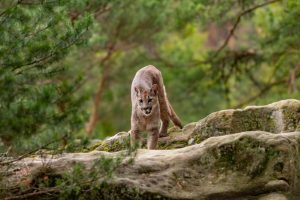
The Redwood Coast is one of the most rewarding places in Northern California and Southern Oregon for travelers who want to experience wildlife in its natural environment.
Within a single day, visitors may see whales offshore, seals near coastal rocks, sea lions around a harbor, Roosevelt elk grazing beside a redwood forest, bald eagles above a river, pelicans along the coast, shorebirds on the sand, salamanders beneath the canopy, banana slugs crossing a damp trail, or tide-pool creatures moving between rocks.
Wildlife sightings are never guaranteed. Animals move according to food, weather, tides, migration, breeding seasons, ocean conditions, and human activity. The best wildlife experiences usually happen when travelers slow down, remain quiet, carry binoculars, and observe from a respectful distance.
This guide explains what wildlife you may encounter near White Rock Resort, Crescent City, Brookings, the redwoods, beaches, rivers, harbors, tide pools, and the California-Oregon border.
Why the Redwood Coast Supports So Much Wildlife
The Crescent City and Brookings region contains an unusually wide variety of habitats within a relatively short driving distance.
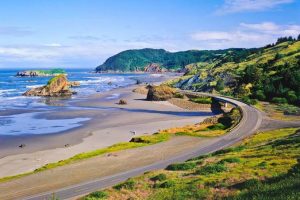
Coastal Habitats
- Pacific Ocean
- Beaches
- Rocky shores
- Offshore rocks
- Harbors
- Estuaries
Forest & River Habitats
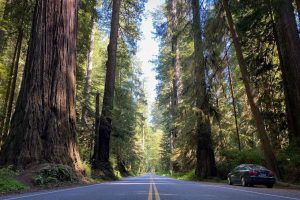
- Old-growth redwood forests
- Coastal prairies
- Rivers
- Wetlands
- Forest edges
- River corridors
Each habitat supports different species. A visitor standing beside the ocean may see whales, seabirds, seals, or sea lions. A short drive inland may reveal elk, deer, birds of prey, amphibians, and forest animals.
Redwood National and State Parks protect an interconnected landscape of forests, prairies, rivers, beaches, estuaries, and coastline, creating opportunities to experience wildlife in very different settings during the same vacation.
Wildlife Viewing Is About Observation, Not Interaction
Wild animals should remain wild. A close encounter is not necessarily a better encounter. If an animal changes its behavior because of your presence, you are probably too close.
Use binoculars and camera zoom instead of moving closer. Stay on established trails, keep pets controlled, never feed wildlife, and leave animals an open route to move away.
What Wildlife Is Most Commonly Seen?
Along the Coast
- Gray whales
- Seals
- Sea lions
- Pelicans
- Cormorants
- Gulls
- Shorebirds
In Forests & Prairies
- Roosevelt elk
- Deer
- Bald eagles
- Hawks
- Ravens
- Salamanders
- Banana slugs
In Tide Pools
- Sea anemones
- Sea stars
- Crabs
- Mussels
- Snails
- Barnacles
- Small fish
Around Rivers & Estuaries
- River otters
- Waterfowl
- Eagles
- Osprey
- Herons
- Salmon
- Amphibians
Gray Whales
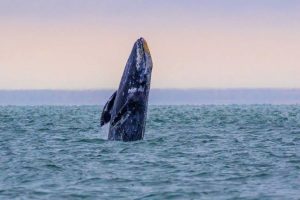
Gray whales are among the best-known marine mammals along the Pacific Coast. Many eastern North Pacific gray whales migrate between feeding areas in northern waters and breeding or calving areas near Mexico. Some whales remain along the Oregon and Northern California coast during summer to feed.
When watching from shore, look for:
A burst of mist above the water.
A long dark back breaking the surface.
A tail appearing before a deeper dive.
Repeated surfacing in one area.
Several blows moving in one direction.
Bird activity above possible feeding areas.
A whale may be visible for only a few seconds before disappearing beneath the water. Patience is essential.
When Can You See Gray Whales?
Winter
Many gray whales travel south toward breeding and calving areas near Mexico.
Spring
Whales return north toward feeding grounds. Mothers and calves may sometimes travel relatively close to shore.
Summer
Some gray whales remain along portions of Northern California and Oregon as part of a coastal feeding pattern.
Fall
Some whales may continue feeding along the coast while other marine wildlife remains active offshore.
These are broad seasonal patterns rather than guaranteed sighting dates. Visibility, ocean conditions, weather, and whale location change continuously.
Best Places to Look for Whales
Whales may be observed from elevated coastal overlooks, open beaches, headlands, harbor entrances, scenic viewpoints, approved coastal trails, and responsible whale-watching vessels.
Elevated viewpoints can be particularly useful because they allow visitors to scan a wider section of ocean. Look beyond the breaking waves rather than directly at the shoreline.
How to Spot a Whale From Shore
Start by scanning slowly from left to right. When you see a blow, keep watching slightly ahead of where it appeared. The whale may surface again after continuing underwater.
Do not expect constant breaching. Many successful whale sightings involve only a brief blow and part of the whale's back.
Other Whales and Dolphins
Although gray whales are among the most frequently discussed species in the region, travelers may occasionally encounter other cetaceans, including:
- Humpback whales.
- Orcas.
- Various dolphins.
- Porpoises.
These sightings are less predictable. Some animals travel far offshore while others may appear temporarily near feeding activity. Never assume the identity of a distant animal from a quick glimpse.
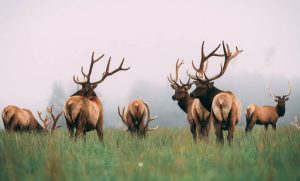
Roosevelt Elk
Roosevelt elk are among the most impressive animals of the Redwood Coast. They inhabit coastal forests, prairies, beaches, river areas, and forest-edge environments throughout portions of Northern California and the Pacific Northwest.
Visitors may see:
- Cows grazing in open prairie.
- Calves near females.
- Bulls with large antlers.
- Herds near forest edges.
- Elk crossing roads.
- Animals resting near beaches or rivers.
An elk sighting can be memorable, but these animals require significant distance and caution.
Where Are Elk Commonly Seen?
Frequent elk-viewing areas farther south include portions of Prairie Creek Redwoods State Park, Gold Bluffs Beach, Bald Hills Road, and the Orick area.
Elk may also occur in other suitable habitats closer to Crescent City. Sightings cannot be guaranteed because elk move according to weather, food, season, disturbance, and habitat conditions.
Elk Seasons
Spring & Early Summer
Calves may be born in open grassy areas. Female elk may become especially protective.
Late Summer & Fall
Bull elk may carry large antlers and the fall rut can bring more aggressive and unpredictable behavior.
Winter
Herds may continue using prairies, forest edges, and lower-elevation habitats.
Any Season
Give elk substantial space and never assume that a calm-looking animal is comfortable with your presence.
Never Approach an Elk for a Photograph
Large animals can cover distance quickly. A bull may react defensively during the rut, while a cow may protect a calf.
- Do not walk toward elk.
- Do not attempt a selfie.
- Do not feed them.
- Do not encourage children to approach.
- Do not block their route.
- Do not use a drone to follow them.
A long-distance photograph is safer and more respectful.
Deer
Deer may be seen in meadows, forest edges, parks, roadsides, open fields, residential areas, and river corridors.
They may appear calm, but they remain wild animals. Avoid feeding them, keep dogs controlled, and watch carefully for deer while driving, especially around dawn and dusk.
River Otters
River otters may occasionally be seen in rivers, estuaries, lagoons, harbors, wetlands, and other coastal waterways.
They may swim, dive, or move quickly along a bank. A distant otter can be difficult to identify, so use binoculars and avoid approaching the water's edge recklessly to get a better view.
Are Sea Otters Common Here?
Travelers sometimes assume that every otter seen near the ocean is a sea otter. Along the far Northern California and Southern Oregon coast, river otters may enter marine and estuarine environments.
Sea otter distribution is more limited, so visitors should not automatically label a distant otter sighting as a sea otter. A reliable field guide, naturalist, or clear photograph can help with identification.
Black Bears
Black bears inhabit forested areas of Northern California and Southern Oregon, although most visitors will never see one. Bears generally avoid busy areas and may remain hidden in dense vegetation.
To reduce the chance of conflict:
- Store food securely.
- Never leave food scraps behind.
- Keep coolers closed.
- Follow park and property rules.
- Keep pets controlled.
- Never approach or feed a bear.
- Give the animal an open escape route.
What to Do if You See a Bear
Remain calm and do not approach the animal.
Gather your group together.
Keep children close.
Secure pets.
Increase your distance.
Do not run toward or after the animal.
Follow current park guidance.
Appropriate responses can depend on the circumstances, so review official bear-safety guidance before entering remote areas.
Coyotes and Bobcats
Coyotes and bobcats may live throughout forest, prairie, and coastal habitats, but they are often elusive.
Visitors may notice:
- A coyote crossing a road.
- A bobcat moving near brush.
- Tracks in sand or mud.
- Scat beside a trail.
- An animal disappearing into vegetation.
Do not attempt to follow, corner, feed, or photograph these animals at close range.
Seals and Sea Lions
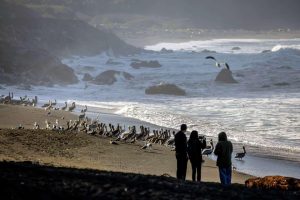
Seals and sea lions may be observed around harbors, offshore rocks, river mouths, beaches, and coastal viewpoints.
Harbors can provide good viewing because marine mammals may follow fish or rest near structures. However, working harbors contain moving vehicles, fishing gear, slippery surfaces, water hazards, and commercial equipment.
Remain in legal public areas and never enter restricted docks or interfere with harbor operations.
Never Feed Seals or Sea Lions
Feeding marine mammals can change natural behavior, encourage animals to approach people or boats, increase aggression, expose animals to harmful food, and create conflict with fishing operations.
Never toss fish, scraps, or bait toward marine mammals.
What to Do if You See a Seal Pup on the Beach
A young seal resting alone may not be abandoned. Its mother may be feeding offshore and may avoid returning while people or dogs remain nearby.
- Stay far away.
- Keep dogs away.
- Do not touch the animal.
- Do not pour water on it.
- Do not attempt to move it.
- Do not surround it for photographs.
- Contact the appropriate wildlife-response authority if it appears injured or in immediate danger.
Birds of the Redwood Coast
The combination of ocean, rivers, wetlands, forests, prairies, and estuaries creates excellent habitat for a wide range of birds.
Coastal Birds
- Pelicans
- Cormorants
- Gulls
- Shorebirds
- Waterfowl
Raptors & Forest Birds
- Bald eagles
- Osprey
- Hawks
- Ravens
- Other forest birds
Move slowly, remain quiet, and avoid approaching nests or repeatedly flushing birds from feeding areas.
Tide-Pool Wildlife
Tide pools offer some of the most accessible wildlife viewing along the coast. When tides and surf conditions are appropriate, visitors may observe a miniature ecosystem among the rocks.
Possible Sightings
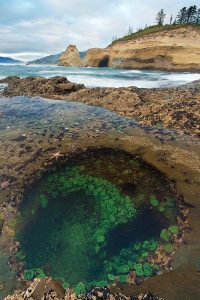
- Giant green sea anemones
- Sea stars
- Hermit crabs
- Shore crabs
- Mussels
- Limpets
Look Carefully
- Snails
- Barnacles
- Small fish
- Chitons
- Algae
- Other intertidal organisms
Tide pools are living habitats, not natural aquariums designed for handling. Observe without touching or removing animals.
Sea Anemones
Sea anemones may appear open beneath water or closed into rounded shapes when exposed. Some may appear green, brown, or muted in color.
Do not press, poke, pull, or remove them. Even gentle touching can interfere with feeding or damage delicate tissue.
Sea Stars
Sea stars may be seen attached to rocks or moving slowly through intertidal areas.
Never pull them from rocks, lift them for photographs, carry them between pools, remove them from the water, or take them home. Photograph them where they are.
Crabs, Mussels, and Barnacles
Small crabs may hide beneath rocks, seaweed, sand, and shallow water. Do not overturn rocks unnecessarily or place fingers into unseen crevices.
Mussels and barnacles may form dense communities on exposed rocks. Avoid walking across them because they can be slippery, sharp, easily crushed, and important habitat for smaller organisms.
Tide-Pool Safety Comes First
- Check the tide before leaving.
- Check surf conditions.
- Arrive before low tide.
- Identify your return route.
- Wear secure footwear.
- Watch the ocean continuously.
- Keep children close.
- Leave before water rises significantly.
- Avoid high-surf days.
- Never turn your back on the ocean.
A wildlife sighting is never worth becoming trapped or injured.
Wildlife Around Rivers and Estuaries
Rivers and estuaries are productive wildlife habitats because fresh water and salt water interact.
Salmon
Waterfowl
Otters
Eagles
Osprey
Herons
Seals
Amphibians
Riverbanks may be slippery, unstable, flooded, steep, or covered in vegetation. Remain on legal public access routes and never enter cold or moving water to get closer to wildlife.
Salamanders and Banana Slugs
Some of the smallest wildlife encounters can become the most memorable. Damp redwood forests provide excellent conditions for amphibians and invertebrates.
Look carefully along established trails for:
- Salamanders.
- Banana slugs.
- Small insects.
- Forest spiders.
- Beetles.
- Other decomposers and forest-floor organisms.
A banana slug crossing a trail can be especially exciting for children. Observe it without touching or moving it.
Butterflies, Dragonflies, and Insects
The coast and redwood region also supports extensive insect diversity.
- Butterflies.
- Moths.
- Dragonflies.
- Beetles.
- Bees.
- Aquatic insects.
- Forest insects.
Do not collect insects or specimens from natural areas. Observe them where they are.
Wildlife From White Rock Resort
Depending on the cabin, season, weather, and animal movement, guests may be able to watch for wildlife from or near the property.
Possible Coastal Sightings
- Seabirds.
- Shorebirds.
- Marine mammals offshore.
- Migrating whales.
Possible Land Sightings
- Deer.
- Raptors.
- Small coastal animals.
- Birds in nearby vegetation.
Bring binoculars to breakfast or outdoor seating. A quiet morning at the cabin may produce a wildlife sighting without requiring a drive.
No particular animal should be promised because wildlife remains unpredictable.
Best Wildlife Viewing by Season
Winter
- Southbound gray-whale migration.
- Wintering waterbirds.
- Storm-driven seabird activity.
- Bald eagles near rivers.
- Marine mammals around sheltered areas.
Spring
- Northbound gray whales.
- Migrating birds.
- Increased amphibian activity.
- Elk calves later in the season.
- Nesting behavior.
Summer
- Coastal-feeding gray whales.
- Seals and sea lions.
- Elk in prairie areas.
- Tide-pool life.
- Nesting seabirds.
Fall
- Elk rut.
- Migrating birds.
- Salmon movement in suitable rivers.
- Marine mammal activity.
- Changing coastal weather.
These are general possibilities rather than guarantees. Wildlife patterns vary from year to year.
Best Time of Day for Wildlife Viewing
Early Morning
- Quieter trails.
- Active birds.
- Grazing elk.
- Less traffic.
- Calm observation conditions.
Midday
- Tide pools when low tide occurs.
- Harbor wildlife.
- Soaring raptors.
- Offshore marine mammals.
Late Afternoon
- Grazing deer or elk.
- Active birds.
- Softer photography light.
- Wildlife near forest edges.
Evening
- Owl calls.
- Deer movement.
- Coastal sunsets.
- Marine wildlife silhouettes.
Do not remain on remote trails or tide-dependent beaches after dark.
How to Photograph Wildlife Responsibly
Wildlife photography requires patience rather than proximity.
Use a zoom or telephoto lens.
Carry binoculars.
Bring extra batteries.
Protect equipment from rain.
Use a lens cloth.
Wear appropriate layers.
Use the longest practical lens rather than moving closer.
Do not bait wildlife, play recorded calls repeatedly, block an animal's route, approach nests, surround an animal, use flash at close range, or chase an animal for a better photograph.
The animal's well-being matters more than the photograph.
Photographing Whales
Whale photography can be challenging because a whale may surface for only a few seconds.
- Use a fast shutter speed.
- Watch where the whale last surfaced.
- Keep both eyes open when possible.
- Include the coastline for scale.
- Take several frames during each surfacing.
- Use binoculars first to locate activity.
A photograph of a blow or partial back may still document a meaningful sighting.
Photographing Elk
Remain far away. Use a telephoto lens, a safe designated viewpoint, or a vehicle as a stable observation point where appropriate and legal.
Never ask another person to stand near elk for scale. Do not move toward a herd simply because the animals appear calm.
Photographing Birds
Move slowly, remain quiet, and allow birds to return to feeding areas. Stay away from nests and avoid repeatedly flushing birds.
Natural cover can help with observation, but remain on legal paths and never disturb vegetation or nesting areas to obtain a better angle.
Wildlife Watching With Children
Children may enjoy wildlife viewing when the experience feels interactive.
Try a Wildlife Challenge
- Wildlife checklist.
- Drawing journal.
- Photography challenge.
- Bird counting.
- Track identification.
Teach Observation
- Listen for calls.
- Compare animal shapes.
- Use binoculars.
- Record sightings.
- Leave animals undisturbed.
Do not promise a specific animal. Instead of saying, “We will see a whale,” say, “We will look for whales.” This teaches children that wildlife follows its own schedule.
Teach Children Wildlife Rules
Animals are not pets.
Never feed wildlife.
Stay beside an adult.
Do not run toward an animal.
Do not touch tide-pool creatures.
Keep voices low.
Remain on trails.
Do not collect feathers, nests, or eggs.
Create a Wildlife Bingo Card
Turn wildlife observation into a simple family game without disturbing anything in nature.
Whale blow
Sea lion
Elk
Deer
Pelican
Eagle
Banana slug
Sea anemone
Shorebird
Animal track
Wildlife Viewing for Older Adults and Travelers With Limited Mobility
Wildlife viewing does not always require a long hike. Some travelers may prefer:
- Harbor viewing.
- Scenic drives.
- Coastal overlooks.
- Short accessible trails.
- Cabin-based viewing.
- Picnic areas.
- Wildlife tours.
- Birdwatching from benches.
- Viewing from a vehicle.
Before choosing an outing, consider walking distance, trail surface, restrooms, parking, seating, wind exposure, accessibility, and viewing height.
Common Wildlife-Viewing Mistakes
Do Not Promise Sightings
Wildlife cannot be scheduled. A quiet outing can still be successful even without seeing a large animal.
Do Not Approach Elk
Use binoculars and maintain substantial distance.
Do Not Feed Wildlife
Feeding changes natural behavior and can create conflict.
Do Not Touch Tide-Pool Life
Observe animals where they live without handling them.
Do Not Approach Seal Pups
A mother may be nearby even when a pup appears alone.
Keep Dogs Away
Leashes do not eliminate disturbance. Keep pets well away from wildlife.
Do Not Block Roads
Use legal pullouts and never stop in unsafe locations for a photograph.
Do Not Enter Dangerous Surf
Observe coastal wildlife from a secure location.
How to Improve Your Chances of Seeing Wildlife
Arrive Earlier
Morning often provides quieter conditions and more active wildlife.
Stay Longer
A twenty-minute observation can be more productive than several rushed stops.
Remain Quiet
Animals may return once human noise and movement decrease.
Use Binoculars
Distance improves both safety and observation.
Visit Different Habitats
Combine coast, harbor, forest, river, and prairie environments.
Accept Uncertainty
Wildlife viewing is never guaranteed, and that uncertainty is part of the experience.
Best General Recommendation for First-Time Visitors
Start Near the Coast
Begin with ocean viewing from White Rock Resort or a safe coastal viewpoint. Bring binoculars and give yourself time to scan the water.
Look for Marine Wildlife
Visit an appropriate coastal overlook or harbor area and watch for seals, sea lions, seabirds, or distant whales.
Explore the Redwoods
Take a short redwood walk and look for birds, deer, salamanders, banana slugs, and other forest wildlife.
Return to the Cabin
Review photographs, record sightings, and enjoy the coast without rushing into another activity.
Why White Rock Resort Is a Strong Wildlife-Viewing Base
White Rock Resort places travelers within reach of a wide variety of wildlife habitats.
Pacific Ocean viewing
Crescent City
Brookings
Coastal overlooks
Harbors
Redwood forests
Rivers and estuaries
Beaches and tide pools
Prairie habitats
Scenic wildlife drives
Depending on the selected accommodation, guests may also enjoy comfortable indoor spaces, ocean views, outdoor seating, kitchen or kitchenette access, convenient parking, and a quiet setting for returning after a day of wildlife observation.
Wildlife Near Crescent City and Brookings
What wildlife can you see near Crescent City?
Travelers may see whales, seals, sea lions, elk, deer, eagles, pelicans, shorebirds, otters, salamanders, banana slugs, and tide-pool animals.
Can you see whales from shore?
Yes. Gray whales and occasionally other cetaceans may be visible from elevated overlooks and beaches, although sightings are never guaranteed.
What is the best season for gray whales?
Winter and spring are major migration periods, while some gray whales may feed along portions of the Oregon and Northern California coast during summer and fall.
Where can you see sea lions?
Sea lions may be seen near harbors, offshore rocks, river mouths, and coastal viewpoints.
Are Roosevelt elk near Crescent City?
Elk occur throughout portions of Redwood National and State Parks and may be seen in prairies, forests, beaches, and river habitats. More frequent viewing areas are generally farther south near Prairie Creek and Orick.
Are elk dangerous?
Yes. Elk are large, fast, wild, and unpredictable, particularly around calves and during the fall rut. Maintain substantial distance.
Can children explore tide pools?
Yes, with close supervision, appropriate tides, secure footwear, and strict no-touch wildlife practices.
Should we feed gulls or squirrels?
No. Feeding wildlife can cause dependence, aggression, illness, and conflict.
Can dogs approach seals?
No. Keep dogs far from seals, sea lions, nesting birds, elk, and all other wildlife.
What birds can be seen?
Possible birds include eagles, osprey, hawks, pelicans, cormorants, gulls, shorebirds, herons, waterfowl, ravens, and forest birds.
Are black bears present?
Black bears live in the broader forest region, although most visitors will not see one.
Can you see otters?
River otters may occasionally be seen around rivers, estuaries, lagoons, wetlands, harbors, and coastal waterways.
What is the best equipment for wildlife viewing?
Binoculars, warm layers, a camera with zoom, rain protection, and a field guide are useful.
What should we do if we find an injured animal?
Keep your distance, protect the area from people and pets, and contact the appropriate wildlife or park authority.
What is the most important wildlife rule?
Remain far enough away that the animal does not change its behavior because of you.
Insider Tip
Do not spend the entire wildlife outing walking.
Choose one safe place and remain there quietly for at least fifteen or twenty minutes. At first, the area may seem empty. Then you may begin to notice:
- A bird calling from the forest.
- A seal surfacing beside a rock.
- A whale blow on the horizon.
- An eagle above the river.
- A banana slug beside the trail.
- An elk emerging from the trees.
Wildlife often becomes visible only after people stop moving long enough to observe it.
Experience Redwood Coast Wildlife From White Rock Resort
Wildlife is woven into nearly every part of the Crescent City and Brookings coastal experience.
Whales travel offshore. Seals and sea lions use harbors and rocks. Elk move between prairie, forest, river, and beach habitats. Eagles and osprey search waterways. Shorebirds follow the tide. Salamanders and banana slugs thrive beneath the damp redwood canopy. Crabs, sea stars, and anemones live inside rocky tide pools.
Guests do not need to visit a zoo or scheduled attraction to experience wildlife. They need patience, appropriate equipment, safe access, and respect for the animals' space.
Bring binoculars. Walk quietly. Watch the ocean. Look upward. Check the forest floor. Keep pets controlled. Never feed or touch wildlife. Leave enough distance for every animal to remain comfortable and wild.
At White Rock Resort, guests can explore beaches, forests, rivers, harbors, and coastal viewpoints during the day, then return to a comfortable cabin where another wildlife sighting may be waiting just beyond the window.
Make the Redwood Coast Your Home Base
Stay close to the Pacific, redwoods, Crescent City, Brookings, rivers, beaches, and some of the region's most memorable wildlife-viewing opportunities.
Explore Cabins & AvailabilityWildlife information should always be checked against current official guidance before traveling. Conditions, wildlife activity, closures, tides, access, and seasonal restrictions can change. Consult current information from the National Park Service, local park authorities, and other relevant wildlife agencies before visiting.