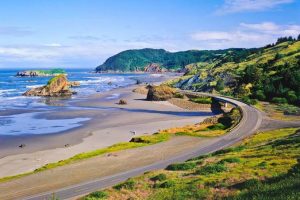
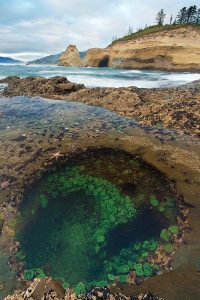
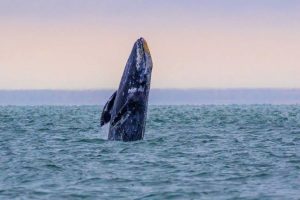
The coastline near Crescent City and the California-Oregon border offers an extraordinary variety of beach experiences, from long stretches of sand and rugged rock formations to tide pools, sea stacks, wildlife, harbor views, and dramatic sunsets.
Travelers can find beaches bordered by redwood forests, easily accessible day-use areas, scenic overlooks, quiet walking areas, and more remote beaches reached by trails.
However, not every beach is suitable for every visitor. Some are better for families, some for photography, some for tide pooling, and others for travelers seeking solitude or a romantic sunset.
The Northern Pacific coast is also powerful and unpredictable. Cold water, sneaker waves, strong currents, slippery rocks, moving driftwood, high surf, and changing tides require visitors to remain cautious.
This guide explains how to choose the best beach near Crescent City and the state border based on your group, interests, mobility, weather, tide conditions, and available time.
Because access, parking, closures, pet rules, surf conditions, and facilities may change, guests should verify current information before leaving White Rock Resort.
Why This Coastal Area Is So Special
The coastline around Crescent City and Brookings brings several landscapes together.
This variety allows travelers to experience several very different beaches during one vacation. One morning may include a long walk on open sand, the afternoon may involve tide pools surrounded by rocks, and the evening may end at a viewpoint overlooking sea stacks and sunset.
Are the Beaches Near Crescent City Good for Swimming?
Travelers should not assume that Northern California beaches are traditional warm-water swimming beaches.
The Pacific Ocean in this region can involve:
- Cold water.
- Strong currents.
- Rip currents.
- Steep shore breaks.
- Sudden waves.
- Submerged rocks.
- Floating driftwood.
- Rapidly changing conditions.
Many visitors enjoy these beaches primarily for walking, photography, wildlife, beachcombing, tide pooling, scenic views, picnics, sunset, and quiet reflection.
Enter the water only where conditions, posted information, local guidance, and your ability make it appropriate. Children should remain closely supervised at all times.
Crescent Beach
Crescent Beach is one of the most convenient and recognizable beaches south of Crescent City.
The Crescent Beach Day Use Area provides beach access and parking suitable for vehicles of varying sizes. The nearby Crescent Beach section of the California Coastal Trail is described by the National Park Service as relatively flat and family-friendly, with beach access, Sitka spruce, and possible Roosevelt elk sightings in nearby prairie areas.
Crescent Beach may appeal to travelers who want:
- A long beach walk.
- Open coastal scenery.
- Family exploration.
- Photography.
- Beachcombing.
- A picnic.
- A convenient stop before or after visiting the redwoods.
- Space to enjoy the shoreline without selecting a technical hike.
Why Visit Crescent Beach?
Crescent Beach can work well for:
- First-time visitors.
- Families.
- Couples.
- Older children.
- Photographers.
- Travelers combining beach and redwood activities.
- Guests who want a broad coastal landscape.
The long shoreline gives visitors room to walk while enjoying views of waves, distant bluffs, sea stacks, forested hills, and changing coastal light.
As with every local beach, visitors should remain aware of surf and tides.
Crescent Beach Overlook
Travelers who prefer a viewpoint rather than a long beach walk may enjoy Crescent Beach Overlook.
The National Park Service describes the overlook as offering views of miles of beach, Crescent City Harbor, and offshore sea stacks when visibility is clear. A short paved path leads from the limited parking area to the overlook platform and picnic tables.
This may be a good choice for:
- Sunset.
- Photography.
- Older adults.
- Travelers with limited walking time.
- Couples.
- A short stop during a scenic drive.
- Visitors who want a coastal view without descending to the beach.
Parking is limited, so guests should have an alternate plan if spaces are occupied.
Enderts Beach
Enderts Beach is a rugged coastal destination reached by a descending trail from the end of Enderts Beach Road.
The National Park Service notes that the beach is reached by approximately a half-mile hike and is known for tide-pool opportunities. Facilities are located near the parking area rather than on the beach itself. Visitors are advised to check tides before going.
Enderts Beach may appeal to:
- Tide-pool explorers.
- Photographers.
- Couples.
- Active families.
- Visitors seeking a more rugged beach.
- Travelers comfortable with a trail descent and return climb.
Is Enderts Beach Suitable for Everyone?
Not necessarily.
Visitors should consider:
- The descending trail.
- The uphill return.
- Wet or muddy conditions.
- Uneven terrain.
- Limited beach facilities.
- Tide timing.
- Surf.
- The physical ability of the group.
It may not be the easiest choice for:
- Visitors with limited mobility.
- Families carrying extensive beach equipment.
- Very young children without appropriate supervision.
- Travelers who want immediate vehicle-to-sand access.
However, for prepared visitors, it can provide a memorable combination of trail, beach, rocks, and intertidal life.
Tide Pools at Enderts Beach
Enderts Beach is one of the recognized tide-pool locations within Redwood National and State Parks.
Tide pooling should be planned around:
- A suitable low tide.
- Safe surf.
- Daylight.
- Stable weather.
- Enough time to return before water rises.
Look without disturbing.
Do not:
- Remove animals.
- Pull organisms from rocks.
- Step on living surfaces.
- Leave trash.
- Turn over rocks unnecessarily.
- Place hands in unseen crevices.
The goal is to observe the intertidal ecosystem while leaving it intact.
Pebble Beach in Crescent City
Pebble Beach is a scenic coastal area within Crescent City known for ocean views, rocky shoreline, sea stacks, tide pools during suitable conditions, sunset, photography, and wildlife observation.
The National Park Service identifies Pebble Beach as another tide-pool area north of Enderts Beach.
Pebble Beach may be especially appealing to:
- Photographers.
- Couples.
- Visitors seeking a shorter town-based outing.
- Tide-pool observers.
- Guests who want to combine the beach with Crescent City restaurants or harbor activities.
What Makes Pebble Beach Different?
Unlike a broad sandy beach designed mainly for long walking, Pebble Beach offers a more textured coastal scene.
Visitors may see:
- Rocks.
- Pebbles.
- Small coves.
- Offshore formations.
- Waves breaking around sea stacks.
- Changing reflections.
- Marine life at low tide.
Footing may be uneven and slippery. Wear shoes with traction and keep children close.
Battery Point and the Crescent City Shoreline
The shoreline near Battery Point provides iconic Crescent City scenery.
Depending on tide and access conditions, visitors may enjoy:
- Lighthouse views.
- Coastal photography.
- Harbor scenery.
- Beach walking.
- Sunset.
- Historical interest.
Tidal access should never be assumed. A route that is open at one time may become covered as the tide rises.
Visitors should check current access information and return well before water crosses the route.
South Beach
South Beach is located near Crescent City Harbor and may appeal to visitors who want easy access from town, a shoreline walk, harbor views, a convenient family stop, a break during shopping or dining, or a less remote coastal experience.
Because it is close to town and harbor activity, South Beach may feel more accessible than remote park beaches.
Visitors should still remain alert to:
- Waves.
- Wind.
- Vehicles near access areas.
- Working harbor activity.
- Dogs.
- Fishing equipment.
- Changing surf conditions.
Point St. George and Nearby Coastal Areas
The Point St. George area offers broad coastal scenery north of Crescent City.
Depending on the specific access point and current rules, visitors may find:
- Open views.
- Grasslands.
- Rocky shoreline.
- Birdwatching.
- Photography.
- Windy coastal conditions.
- Quiet walking opportunities.
This area may be more exposed than protected coves.
Bring:
- Wind-resistant layers.
- Sturdy shoes.
- Binoculars.
- A charged phone.
- Offline directions.
Avoid unstable cliff edges and unofficial paths.
Tolowa Dunes and Northern Del Norte Beaches
Northern Del Norte County includes dune, wetland, lake, and beach environments.
These areas may provide:
- Long walks.
- Birdwatching.
- Quiet scenery.
- Open sand.
- Wetlands.
- Wildlife.
- Photography.
- Fewer urban features.
Visitors should confirm:
- Current access.
- Trail conditions.
- Parking.
- Pet rules.
- Seasonal flooding.
- Hunting-season considerations where applicable.
- Whether the route is appropriate for children or older travelers.
Remote beaches require more preparation than town beaches.
Harris Beach State Park
Harris Beach State Park is one of the best-known coastal destinations near Brookings, Oregon.
The park is known for sandy beaches, rocky outcroppings, tide pools, sea stacks, marine wildlife, and offshore Bird Island, also known as Goat Island.
Harris Beach may appeal to:
- Families.
- Couples.
- Photographers.
- Tide-pool explorers.
- Wildlife watchers.
- Visitors combining Brookings with a beach outing.
- Travelers who want dramatic Southern Oregon scenery.
Why Visit Harris Beach?
Harris Beach offers a classic Southern Oregon coastal landscape.
Visitors may enjoy:
- Sand.
- Rocks.
- Sea stacks.
- Tide pools.
- Sunset.
- Seasonal wildlife.
- Beachcombing.
- Photography.
The combination of open beach and rocky features makes it useful for groups with different interests.
Tide Pools at Harris Beach
Rocky sections can expose tide pools when tides and surf are appropriate.
Before exploring:
- Check tide tables.
- Watch the water for several minutes.
- Identify a safe return route.
- Wear secure footwear.
- Keep children within reach.
- Avoid turning your back on the ocean.
- Leave before the tide begins rising significantly.
Rocky tide-pool areas can become slippery. Move slowly and avoid jumping between wet surfaces.
Beaches Near Samuel H. Boardman Scenic Corridor
Farther north along the Southern Oregon coast, the Samuel H. Boardman Scenic Corridor offers dramatic viewpoints, forested bluffs, sea stacks, natural arches, small coves, coastal trails, and photography opportunities.
Some beaches and viewpoints require:
- Steep trails.
- Uneven terrain.
- Root-covered paths.
- Narrow sections.
- Careful navigation.
- More physical effort.
These are not always traditional easy-access beach destinations.
Choose specific stops based on:
- Mobility.
- Weather.
- Daylight.
- Trail conditions.
- Children's ages.
- Parking availability.
Lone Ranch Beach
Lone Ranch Beach, north of Brookings, is often chosen for coastal scenery, picnic opportunities, beach walking, rock formations, photography, and family outings.
It may provide a more open and approachable beach experience than some steeper corridor trails.
Visitors should still check:
- Surf.
- Wind.
- Tide.
- Restroom availability.
- Pet rules.
- Parking conditions.
A beach that appears broad at low tide may offer much less space later.
Which Beach Is Best for Families?
A family-friendly beach should provide more than attractive scenery.
Consider:
- Parking distance.
- Restrooms.
- Trail difficulty.
- Beach width.
- Surf exposure.
- Driftwood.
- Wind.
- Space for children.
- Whether the return route can be cut off by tides.
- Nearby food and services.
Crescent Beach and Harris Beach may be practical starting points for many families because they offer recognizable access areas and broad coastal scenery.
Important Reminder
“Family-friendly” never means unsupervised. Children should remain within immediate reach near the water.
Best Beaches for Toddlers
For toddlers, prioritize:
- Short distance from parking.
- Minimal climbing.
- Open visibility.
- Room away from the active surf.
- Nearby restrooms.
- Easy retreat to the vehicle.
- No tide-dependent return route.
Toddlers may enjoy:
- Digging in damp sand.
- Watching birds.
- Collecting visual observations.
- Looking at rocks.
- Following footprints.
- Eating a picnic.
- Taking a very short walk.
They do not need to approach the water to enjoy the beach.
Best Beaches for Older Children
School-age children may enjoy:
- Nature hunts.
- Tide pools.
- Beachcombing.
- Photography.
- Looking for animal tracks.
- Watching boats.
- Learning about sea stacks.
- Identifying birds.
Set clear boundaries before leaving the parking area.
Explain:
- How close they may go to the water.
- Why driftwood can move.
- Why rocks are slippery.
- Why wildlife should not be approached.
- What to do if separated.
Best Beaches for Teenagers
Teenagers may appreciate:
- Photography.
- Tide pools.
- Long walks.
- Sea-stack scenery.
- Sunset.
- Wildlife.
- Social-media content.
- Quiet space.
- Helping choose the destination.
Encourage safe photography. No photograph is worth standing near a cliff edge, climbing unstable rocks, entering dangerous surf, crossing closed areas, or remaining on a tide-dependent route too long.
Best Beaches for Couples
Couples may prefer beaches offering:
- Sunset.
- Quiet walking.
- Dramatic scenery.
- Photography.
- Nearby dining.
- Scenic overlooks.
- A short trail followed by a cabin evening.
Possible choices include:
- Crescent Beach.
- Crescent Beach Overlook.
- Pebble Beach.
- Enderts Beach for more active couples.
- Harris Beach.
- Scenic Southern Oregon viewpoints.
A romantic beach experience often depends more on timing and weather than on selecting the most famous location.
Best Beaches for Older Adults
Older travelers may prefer:
- Short paved approaches.
- Viewpoints.
- Nearby parking.
- Minimal elevation.
- Stable surfaces.
- Benches or picnic tables.
- Restrooms.
- Clear visibility.
A scenic overlook may provide a more enjoyable experience than a difficult descent.
Crescent Beach Overlook may be especially useful for guests who want a major view with only a short paved approach, although parking is limited.
Beaches for Travelers With Limited Mobility
Accessibility varies widely.
Before leaving, ask or verify:
- Is there an accessible parking space?
- Is the route paved?
- Is the beach reached by stairs?
- Is the sand soft?
- Is there an overlook?
- Are restrooms accessible?
- Are benches available?
- How far is the viewpoint from the vehicle?
For some travelers, the best experience may be:
- A coastal overlook.
- A harbor promenade.
- A paved viewpoint.
- A scenic drive.
- A picnic area above the beach.
Direct access to sand is not the only way to enjoy the coast.
Best Beaches for Tide Pools
Potential tide-pool choices include:
- Enderts Beach.
- Pebble Beach.
- Harris Beach.
- Other rocky beaches with legal and safe access.
The best tide-pool beach on a particular day depends on tide timing, wave height, wind, access, daylight, closures, and your group's mobility.
A famous tide-pool location may not be appropriate when surf is high.
How to Read a Tide Table
Tide tables show predicted high and low tides.
For tide pooling, travelers generally look for:
- A lower tide.
- Daylight.
- Sufficient time before the tide begins rising.
- Favorable surf and weather.
The lowest numerical tide is not automatically the safest time.
Also consider:
- Wave conditions.
- Wind.
- Beach shape.
- Access route.
- Rock exposure.
- Local warnings.
Arrive before the predicted low tide so you are not beginning as the water turns.
Never Let the Tide Cut Off Your Return
Some beaches, coves, lighthouse routes, and rocky areas may become inaccessible as water rises.
Before continuing around a point or rock formation, ask:
- Can I see the return route?
- Is the tide rising?
- How quickly is the water moving?
- Are waves already reaching the path?
- Is there an inland exit?
- Does everyone in the group have the ability to return quickly?
Turn around early. Do not wait until water crosses the route.
Sneaker Waves
Sneaker waves are unexpectedly large waves that travel farther up the beach than surrounding waves.
They may:
- Knock people down.
- Pull people into the water.
- Move driftwood.
- Soak equipment.
- Trap visitors against rocks.
- Reach areas that appeared dry.
Remain well above the active surf zone.
Never assume that a dry section of sand is safe simply because several smaller waves stopped below it.
Never Turn Your Back on the Ocean
This advice applies even when:
- Taking photographs.
- Watching children.
- Sitting on driftwood.
- Exploring tide pools.
- Walking a dog.
- Looking for shells.
- Talking with companions.
At least one responsible adult should continue watching the water. The ocean can change faster than a distracted group can react.
Driftwood Safety
Northern coastal beaches often contain large driftwood logs.
Driftwood may appear solid and heavy. However, water can move it suddenly.
Do not:
- Sit on logs near active surf.
- Stand between a log and the ocean.
- Allow children to climb on wet logs.
- Tie dogs to driftwood.
- Shelter behind logs during high surf.
- Assume a large log cannot roll.
A moving log can cause severe injury.
Rip Currents and Strong Water Movement
Rip currents and other strong water movement may be difficult to identify.
Visitors should avoid entering unfamiliar water without understanding conditions, recognizing posted warnings, knowing their ability, confirming whether swimming is advised, and having appropriate supervision.
Do not treat a calm-looking gap between waves as automatically safe.
Cold-Water Risk
Cold Pacific water can quickly affect:
- Breathing.
- Muscle control.
- Judgment.
- Swimming ability.
- Balance.
Even strong swimmers can become overwhelmed. Children are especially vulnerable.
The safest family beach activity may be remaining on dry sand far from breaking waves.
High Surf Advisories
During high-surf conditions:
- Stay far back.
- Avoid jetties.
- Avoid rocks.
- Avoid narrow beaches.
- Avoid driftwood.
- Do not enter tide pools.
- Use elevated viewpoints.
- Follow closures.
High surf can affect a beach even when the sky is clear. Ocean conditions may be created by storms far offshore.
Beach Weather
Coastal weather may change rapidly.
A beach can shift from:
- Sun to fog.
- Calm to wind.
- Mild to cold.
- Dry to misty.
- Clear visibility to low visibility.
Bring:
- Layers.
- Wind-resistant jacket.
- Warm clothing.
- Hat.
- Sunscreen.
- Water.
- Towels.
- Dry shoes.
- Extra clothing for children.
Do not judge the entire day by the weather at the cabin.
Fog
Fog can create beautiful coastal scenery but may reduce:
- Visibility.
- Driver awareness.
- Ability to see landmarks.
- Wildlife observation.
- Sunset views.
- Group awareness.
Keep children and pets closer in fog. Use headlights when driving and avoid stopping on road shoulders.
Wind
Wind can make a mild temperature feel much colder.
It may also affect:
- Children.
- Older travelers.
- Picnic food.
- Umbrellas.
- Hats.
- Sand.
- Photography equipment.
- Vehicle doors.
Bring a secure layer rather than relying on a loose blanket.
Hold vehicle doors firmly when opening them.
Beach Footwear
Appropriate footwear depends on the beach.
For open sand:
- Comfortable walking shoes.
- Secure sandals in mild conditions.
- Bare feet only where surfaces are known and safe.
For tide pools and rocky beaches:
- Closed-toe shoes.
- Strong traction.
- Secure fit.
- Water-resistant material.
Avoid smooth-soled footwear on:
- Wet rocks.
- Algae.
- Driftwood.
- Muddy trails.
Bring dry shoes for the return to the cabin.
Beachcombing
Beachcombing may include looking for:
- Interesting rocks.
- Shell fragments.
- Sea glass.
- Driftwood shapes.
- Feathers.
- Natural patterns.
Collecting rules vary.
Some beaches and protected areas prohibit removing:
- Rocks.
- Plants.
- Driftwood.
- Shells.
- Wildlife.
- Cultural objects.
- Archaeological materials.
When uncertain, photograph the object and leave it where it is.
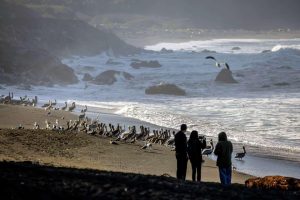
Wildlife Viewing
Beaches near Crescent City and Brookings may offer opportunities to observe:
- Seals.
- Sea lions.
- Whales.
- Shorebirds.
- Pelicans.
- Gulls.
- Raptors.
- Other marine life.
Use binoculars or a zoom lens. Never approach resting marine mammals.
Do not place yourself between wildlife and the water. Keep dogs away from animals and nesting areas.
Roosevelt Elk Near Coastal Areas
The Crescent Beach coastal trail area may provide opportunities to see Roosevelt elk in adjacent prairie environments.
If elk are present:
- Remain far away.
- Do not approach for photographs.
- Do not allow children to move closer.
- Keep pets controlled.
- Do not block the animals' direction of travel.
- Return to the vehicle if needed.
Large wildlife should never be treated as part of a petting-zoo experience.
Whale Watching From the Beach
Whales may occasionally be visible from:
- Elevated overlooks.
- Open beaches.
- Coastal bluffs.
- State parks.
- Harbor areas.
Look for:
- Spouts.
- Dark backs.
- Tail movement.
- Repeated activity in one area.
- Seabirds gathering offshore.
Bring binoculars and patience. Wildlife sightings are never guaranteed.
Dogs on Local Beaches
Dog rules vary by state, park, beach, trail, season, and wildlife protection needs.
For example, the Crescent Beach section of the California Coastal Trail is listed by the National Park Service as not allowing dogs. California State Parks also states that dogs are generally not allowed on trails within Del Norte Coast Redwoods State Park, except for service animals.
Before leaving, confirm the exact rule for the exact destination.
Do not assume that nearby sand and adjoining trails share the same policy.
Pet Beach Safety
When dogs are permitted:
- Use a leash where required.
- Bring water.
- Bring waste bags.
- Avoid wildlife.
- Keep away from driftwood in surf.
- Watch for sharp objects.
- Prevent drinking salt water.
- Dry the dog after the visit.
- Check paws for cuts.
- Keep identification attached.
A dog that is normally obedient may run when frightened by waves, birds, or other animals.
Beach Accessibility for Families With Strollers
Standard strollers often perform poorly on:
- Soft sand.
- Gravel.
- Roots.
- Stairs.
- Mud.
- Rocky trails.
A beach may have accessible parking but still require difficult movement across sand.
Parents may prefer:
- A carrier.
- An all-terrain stroller where appropriate.
- A viewpoint.
- A beach with a shorter approach.
- A picnic area above the sand.
Review the entire route, not just the parking description.
Restrooms and Facilities
Facilities vary greatly.
Some beaches may offer:
- Restrooms.
- Picnic tables.
- Trash containers.
- Large parking areas.
- Interpretive signs.
Others may have:
- Only a trailhead.
- No beach-level facilities.
- Limited parking.
- No potable water.
- No trash service.
Enderts Beach, for example, has facilities near the parking area rather than down on the beach.
Use restrooms before beginning a longer walk. Carry out all trash.
Parking
Beach parking may be:
- Spacious.
- Limited.
- Roadside.
- Suitable only for smaller vehicles.
- Busy during weekends.
- Muddy after rain.
- Closed during maintenance or hazardous conditions.
Arrive earlier during:
- Summer.
- Holidays.
- Low-tide periods.
- Sunset.
- Clear weekends.
Never block:
- Gates.
- Emergency access.
- Private driveways.
- Traffic lanes.
- Trail entrances.
Vehicle Security
At trailheads and beach parking areas:
- Lock the vehicle.
- Take valuables.
- Keep luggage out of sight.
- Do not display electronics.
- Secure wallets and identification.
- Close windows.
- Carry keys safely.
Avoid leaving the vehicle packed visibly with vacation belongings during a long beach walk.
Beach Picnics
A picnic can be enjoyable when conditions are mild.
Bring:
- Wind-resistant containers.
- Water.
- Simple food.
- Napkins.
- Trash bags.
- Warm drinks.
- Hand-cleaning supplies.
Avoid placing food where:
- Gulls can reach it.
- Sand blows into it.
- Dogs can access it.
- Wildlife is attracted.
- The tide can reach it.
Pack out every item.
Fires and Barbecues
Beach fire and cooking rules vary.
Before using any flame:
- Confirm whether fires are permitted.
- Review seasonal restrictions.
- Use only designated areas.
- Check wind conditions.
- Extinguish completely.
- Follow park instructions.
Do not assume that driftwood may be collected or burned.
Do not leave hot coals buried in sand.
Photography
The region offers excellent opportunities to photograph:
- Sea stacks.
- Waves.
- Driftwood.
- Lighthouses.
- Tide pools.
- Fog.
- Wildlife.
- Sunset.
- Families.
- Reflections.
- Coastal cliffs.
Protect equipment from:
- Salt spray.
- Sand.
- Rain.
- Sudden waves.
- Condensation.
- Strong wind.
Carry a lens cloth and protective case.
Never step backward toward the ocean while composing a photograph.
Sunset Photography
For sunset:
- Arrive early.
- Choose a legal viewpoint.
- Confirm the return route.
- Carry a flashlight.
- Wear warm layers.
- Avoid cliff edges.
- Leave before complete darkness if the path is difficult.
Crescent Beach Overlook can provide broad coastal and sunset views when visibility is clear.
Clouds may improve the photograph even when the sun is not fully visible.
Best Beach for a Short Visit
For a brief outing, consider:
- Crescent Beach.
- South Beach.
- Pebble Beach.
- Crescent Beach Overlook.
- A town-based shoreline stop.
Choose a location with:
- Simple parking.
- Short access.
- No tide-dependent return.
- Nearby services.
A short visit should not require an ambitious trail.
Best Beach for a Half Day
A half-day outing may include:
- Crescent Beach and the overlook.
- Enderts Beach during a suitable tide.
- Harris Beach and lunch in Brookings.
- Pebble Beach and Crescent City Harbor.
- A northern coastal beach combined with birdwatching.
Include time for:
- Driving.
- Parking.
- Walking.
- Weather changes.
- Children.
- Photographs.
Best Beach for a Full Day
A full beach day may combine:
- One primary beach.
- A picnic.
- A scenic overlook.
- A nearby town or harbor.
- Sunset.
- A relaxed return to the cabin.
Avoid trying to visit several beaches spread across a long distance. The coast is better enjoyed slowly.
Sample Crescent City Beach Day
Morning
- Eat breakfast at the cabin.
- Check tides, surf, and weather.
- Visit Crescent Beach.
- Take a moderate walk.
- Observe wildlife from a distance.
Midday
- Eat a picnic or lunch in Crescent City.
- Visit the harbor or a nearby viewpoint.
Afternoon
- Stop at Pebble Beach or another easy-access coastal area.
- Return to the cabin for rest.
Evening
- Watch sunset from a safe beach or overlook.
- Enjoy dinner at White Rock Resort or nearby.
Sample Enderts Beach Tide-Pool Day
Before Leaving
- Confirm low tide.
- Confirm surf conditions.
- Wear sturdy footwear.
- Bring water and warm layers.
- Use restrooms near the parking area.
Beach Visit
- Descend carefully.
- Observe the ocean before approaching rocks.
- Explore tide pools without touching or removing wildlife.
- Begin returning before the tide rises.
Afternoon
- Stop at Crescent Beach Overlook.
- Have lunch in Crescent City.
- Return to White Rock Resort early enough to relax.
Sample Brookings and Harris Beach Day
Morning
- Drive north toward Brookings.
- Visit Harris Beach.
- Walk the sand or explore rocks during safe conditions.
Midday
- Eat lunch in Brookings.
- Visit the harbor or local shops.
Afternoon
- Return to Harris Beach or choose another nearby accessible viewpoint.
- Watch for wildlife.
- Begin the return drive before dark.
Evening
- Have an easy dinner at the cabin.
- Review photographs.
- Rest.
Sample Family Beach Day
Morning
- Choose an easy-access beach.
- Bring snacks, water, towels, and extra clothes.
- Keep children far from active surf.
- Build in the sand and take a short walk.
Midday
- Eat a picnic.
- Use restrooms.
- Return to the cabin for naps or quiet time.
Evening
- Take a short sunset walk from a safe distance.
- Have dinner.
- Play a family game.
Do not plan an all-day beach marathon for toddlers.
Sample Couples' Beach Day
Morning
- Coffee at the cabin.
- Scenic beach walk.
- Photography.
Midday
- Lunch in Crescent City or Brookings.
- Visit a coastal overlook.
Afternoon
- Return to the cabin.
- Rest or read.
Evening
- Sunset.
- Special dinner.
- Device-free time.
Sample Pet-Friendly Beach Day
Morning
- Confirm current dog rules.
- Choose an approved destination.
- Bring leash, water, waste bags, and towels.
Beach Visit
- Keep the dog away from wildlife.
- Prevent drinking ocean water.
- Avoid high surf and moving driftwood.
- Keep the outing moderate.
Return
- Rinse or wipe paws.
- Check for cuts.
- Dry the coat.
- Allow the pet to rest.
What to Pack for a Beach Day
Do not rely on the beach having drinking water or mobile service.
Questions to Ask Before Leaving White Rock Resort
- Which beach is closest?
- Which beach has the easiest parking?
- Which beach is best for toddlers?
- Which beach has restrooms?
- Which beach is best for tide pools?
- What time is low tide?
- Are high-surf warnings in effect?
- Which beach is best for sunset?
- Where are dogs permitted?
- Which trails prohibit dogs?
- Which beach is easiest for older adults?
- Is there an accessible overlook?
- Are there current closures?
- Which beach has the least difficult walk?
- Where can we picnic?
- Which beach is best for wildlife?
- Which route should large vehicles avoid?
- Is the road safe after heavy rain?
- How long should we allow?
- What is the safest backup if conditions are poor?
Common Beach-Trip Mistakes
Turning Your Back on the Water
Continue watching the ocean.
Sitting on Driftwood Near the Surf
Logs may move suddenly.
Ignoring the Tide
The return route may disappear.
Assuming Every Beach Is for Swimming
Cold water and currents may make swimming unsafe.
Allowing Children to Run Ahead
Keep them close.
Wearing Smooth Shoes on Tide-Pool Rocks
Use secure traction.
Approaching Wildlife
Observe from a distance.
Assuming Dogs Are Allowed Everywhere
Rules change by location.
Arriving at Sunset Without a Flashlight
The trail may become dark quickly.
Leaving Valuables Visible
Secure the vehicle.
Overplanning the Day
One beach may be enough.
Crossing Barriers
Closures protect visitors and sensitive areas.
Remaining During High Surf
Use an elevated viewpoint instead.
How to Choose the Right Beach
Use six questions.
1. Who Is Traveling?
Consider children, pets, older adults, and mobility.
2. What Do You Want to Do?
Choose among:
- Walking.
- Tide pooling.
- Photography.
- Wildlife.
- Picnicking.
- Sunset.
- Beachcombing.
3. What Is the Tide?
Some destinations depend heavily on tide timing.
4. What Is the Surf Doing?
High surf may eliminate tide pooling or shoreline walking.
5. How Much Time Do You Have?
A short town beach differs from a trail-access destination.
6. What Facilities Do You Need?
Consider restrooms, parking, food, and emergency access.
Best General Recommendation for First-Time Guests
For many first-time visitors, a practical coastal plan may include:
Visitors seeking a more active and rugged experience may add Enderts Beach when tides, trail conditions, weather, and group ability are appropriate.
Why Guests Choose White Rock Resort for Beach Vacations
White Rock Resort places guests near the California-Oregon border, with access to:
Depending on the exact accommodation, guests may return after a beach day to:
- Ocean views.
- Comfortable living areas.
- A kitchen or kitchenette.
- Outdoor seating.
- Wi-Fi.
- Convenient parking.
- Warm showers.
- Space for families.
- Quiet evenings.
- Responsive guest assistance.
The ability to explore several beaches while returning to one comfortable coastal cabin makes White Rock Resort a practical home base.
Frequently Asked Questions
What is the best beach near Crescent City?
The best beach depends on the activity. Crescent Beach is a strong general choice, while Enderts Beach may be better for tide pools and Pebble Beach for rocky scenery.
Is Crescent Beach family-friendly?
It can be a practical family choice because of its open shoreline and established access, but children still require constant supervision.
Is Enderts Beach easy to reach?
It requires a descending hike of approximately half a mile, followed by the return climb.
Where can we find tide pools?
Enderts Beach, Pebble Beach, Harris Beach, and other rocky areas may provide tide pools during suitable low tides and safe surf.
Can we swim at these beaches?
Do not assume swimming is safe. Cold water, currents, surf, and submerged hazards require caution.
Are dogs allowed on Crescent Beach trails?
The Crescent Beach section of the California Coastal Trail is listed as not allowing dogs.
Is Harris Beach worth visiting?
Yes. It offers sand, rocky outcroppings, tide pools, sea stacks, wildlife, and access to Brookings.
Which beach is best for sunset?
Crescent Beach, Crescent Beach Overlook, Pebble Beach, Harris Beach, and other west-facing viewpoints may provide excellent sunset conditions.
What is a sneaker wave?
It is an unexpectedly large wave that travels much farther up the beach than nearby waves.
Is driftwood dangerous?
Yes. Waves can move large logs suddenly.
Should we check the tides before every beach trip?
Yes, especially for tide pools, coves, lighthouse routes, and rocky shorelines.
Are local beaches accessible?
Some have easier parking and viewpoints, while others require stairs, trails, or movement across sand. Confirm the exact site.
Can children explore tide pools?
Yes, with close adult supervision, safe surf, appropriate footwear, and respect for marine life.
What should we wear?
Bring layers, wind protection, sturdy shoes, and extra dry clothing.
How many beaches should we visit in one day?
One primary beach and one nearby viewpoint or harbor stop is usually enough.
Choose the Beach That Fits the Day
Do not choose a beach only because it is the most famous. Choose the beach that matches that day.
A calm low-tide morning may be perfect for tide pools. A windy afternoon may be better for a scenic overlook.
A family with toddlers may enjoy a broad beach near the parking area more than a rugged cove reached by a steep trail.
A couple may prefer sunset and a quiet walk instead of an all-day excursion.
The best beach is the one that fits your group, the tide, the surf, the weather, and the amount of time you actually have.
Explore the Coast From White Rock Resort
The coastline near Crescent City and the California-Oregon border offers something for nearly every traveler.
Families may enjoy broad beaches and short walks. Couples may prefer sunset overlooks and quiet coves. Photographers may seek fog, sea stacks, tide pools, and wildlife. Active travelers may descend to rugged beaches or explore longer coastal trails.
Older guests and travelers with limited mobility may enjoy paved viewpoints and scenic drives.
At White Rock Resort, guests can combine beach exploration with comfortable coastal accommodations, nearby redwood forests, Crescent City, Brookings, and the extraordinary landscapes of the Pacific Northwest.
Check the tides. Watch the surf. Respect wildlife. Choose legal access. Leave natural features undisturbed.
Most importantly, never become so focused on the destination that you stop paying attention to the ocean.
Explore White Rock Resort